
Do Birds Eat From Feeders in Winter? Yes, Here Is Why
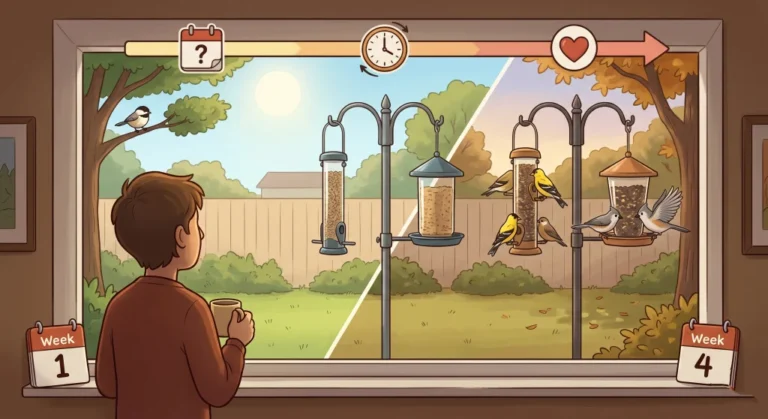
When someone comes into the store and asks, do birds eat from feeders in winter, the question usually follows the same experience: the yard went quiet in late fall, so it feels as if bird feeding season must be over. In many parts of the country, the opposite is closer to the truth. Migration changes which birds are around, and cold, snow, and ice can make a well-maintained feeder more useful.
During warmer months, birds often have access to abundant insects, fruits, seeds, and other natural foods. Winter does not erase those foods, but it can make them harder to reach. Snow can cover seed on the ground, insects become less available, and short days leave less time to forage. A feeder offers a concentrated source of food that some species readily add to the other places they already use.
Is winter bird feeding necessary for survival? Usually, no. Wild birds are adapted to finding changing food sources, and a backyard feeder is best thought of as supplemental food rather than something an entire flock depends on. During severe cold, snow, or ice, however, access to energy-rich food can give feeder-using birds a helpful boost when the cost of staying warm is higher and natural foraging is more difficult.
The Winter Shift: Meet Your New Backyard Birds
One of the biggest misconceptions about cold-weather feeding is that you are simply trying to keep the same summer birds around. In much of the United States, the lineup changes instead. Some year-round residents stay put, many summer migrants leave, and species that bred farther north or at higher elevations may appear for the winter.
Many familiar summer visitors, including most Ruby-throated Hummingbirds and Baltimore Orioles, migrate south. At the same time, birds such as Dark-eyed Juncos, White-throated Sparrows, American Tree Sparrows, and sometimes Pine Siskins can become part of the winter feeder scene. The exact mix depends heavily on region. Some populations are resident, some migrate only short distances, and an irruptive species such as the Pine Siskin can be common one winter and scarce the next.
Field Note: One pattern I saw often at the store was a customer worrying that the birds had disappeared, only to realize the cast had changed. I would tell them to watch the ground and low cover as well as the hanging feeders. In many areas, the first juncos of the season are easy to miss if you are only watching the feeder ports.
Juncos and White-throated Sparrows spend a lot of time foraging on or near the ground, and both can pick up seed beneath feeders. Juncos also use platform and hopper feeders, so they are not limited to ground feeding. A low tray is a cleaner option than scattering seed directly on the ground, especially where rodents are a concern. If you want to understand how to attract birds effectively, winter is a good reminder to match the setup to the birds that are actually present rather than expecting the summer lineup to stay unchanged.
| Bird Species | Summer Status | Winter Status | Typical Winter Region |
|---|---|---|---|
| Ruby-throated Hummingbird | Common breeding-season visitor in much of the eastern U.S. | Most migrate south; occasional birds remain in the U.S. | Mainly Mexico and Central America, with scattered U.S. winter records |
| Baltimore Oriole | Breeding-season visitor across much of the eastern and central U.S. | Most migrate south; a small number winter in the Southeast | Mainly Mexico, Central America, and farther south |
| Dark-eyed Junco | Breeds in Canada, mountain regions, and parts of the West and Appalachians | Common winter visitor in many areas; some populations are resident | Much of the U.S., depending on population |
| White-throated Sparrow | Breeds mainly across Canada and parts of the Northeast | Common winter visitor across much of the East and South | Eastern and southern U.S., with additional western wintering areas |
| American Tree Sparrow | Breeds in far northern North America | Winter visitor | Northern and central U.S., with local variation |
| Fox Sparrow | Breeds across northern and western North America | Winter visitor in many parts of the U.S. | Distribution varies by subspecies, with many wintering along coasts and in the South |
| Pine Siskin | Breeding distribution varies widely | Nomadic and irruptive; abundance can change sharply from year to year | Can appear across much of the U.S. in some winters |
| Northern Cardinal | Year-round resident | Year-round resident, often seen in winter groups | Within its established U.S. range |

Durable recycled plastic tray feeder with metal mesh bottom for drainage and ventilation to keep seeds fresh. Four-chain suspension keeps it stable without spinning or tipping. Holds seeds, nuts, mealworms, and mixed blends to attract bluebirds, cardinals, woodpeckers, doves, finches, and more. Arrives pre-assembled and ready to hang.
Check on AmazonIf you click this link and buy, we earn a commission at no additional cost to you.
The Cold Snap Effect on Feeder Activity
If you are wondering whether birds come to feeders in winter consistently, weather is one of several factors that can change what you see. Mild days do not automatically mean an empty feeder, and every cold front does not produce a rush. But colder conditions raise the energetic cost of staying warm, while snow and ice can reduce access to some natural foods.
Birds conserve heat by fluffing their feathers to trap insulating air, and they can generate additional heat through muscular activity such as shivering. Small songbirds have to replace the energy they use through the day and prepare for long winter nights, which is why calorie-dense foods such as sunflower seed and suet can be especially useful during harsh conditions.
Key point: Cold weather does not guarantee a packed feeder, but supplemental food becomes more valuable when birds are spending more energy on thermoregulation and natural foraging is restricted by snow, ice, or short daylight.
You may also notice extra feeding before or around a storm, but do not treat feeder traffic as a universal weather forecast. Research on White-crowned Sparrows found that declining barometric pressure can increase food intake, showing that at least some birds can respond to a cue associated with approaching storms. What happens at your feeder still depends on the species present, local weather, natural food, and how exposed the feeding station is.

Year-round suet packed with sunflower seeds, millet, and corn to attract woodpeckers, nuthatches, chickadees, and jays. High energy formula provides wild birds a nutritious diet in any season. Refrigerate briefly before use for easy removal from packaging.
Check on AmazonIf you click this link and buy, we earn a commission at no additional cost to you.
How to Know Your Winter Setup Is Working
Sometimes people keep a feeder stocked but assume something is wrong because the yard is quiet during one part of the day. Winter feeder use is rarely that tidy. Different species follow different daily patterns, and activity can come in waves depending on weather, predators, nearby natural food, and competition at the feeder.
Instead of judging the setup from one midday glance, watch several short periods across the day and over several days. Some species are conspicuous early or late, while others feed steadily through much of the daylight period. Learning how to attract birds in winter is partly about recognizing those changing patterns rather than expecting the feeder to stay busy every hour.
Here are better signs that your winter feeding station is being used:
- You see repeat visits across several days, even if the timing changes from one day to the next.
- Ground-feeding birds such as sparrows and juncos pick through fallen seed or use a low tray nearby.
- Feeder activity sometimes increases during harsh weather or after snow and ice make natural food harder to reach.
- Seed is disappearing at a steady rate while the food itself stays dry, loose, and clean enough for birds to access.
To support this activity, focus on food that the birds in your region actually use and keep it in good condition. If you are unsure about the options, what to feed birds in winter covers the practical choices without assuming every winter bird wants the same thing.

Wagner's Four Season Sunflower Seed is 100% black oil sunflower seed. Sunflower seed is the favorite seed of most wild birds. It is high in energy and has a thin shell making it easy for all birds to consume. Use tray feeders or hopper feeders to attract sunflower loving songbirds. Cardinals, Chickadees, Finches, Nuthatches, Woodpeckers and much more. Trust your backyard birds to the experts at Wagner’s.
Check on AmazonIf you click this link and buy, we earn a commission at no additional cost to you.
Final Thoughts: The Importance of Commitment
If you keep feeders up through winter, consistency is useful, but not because birds become locked into a rigid route or depend on one backyard for survival. Individual birds can develop preferred feeding locations, yet they also use multiple natural and supplemental food sources and can switch among them as conditions change.
The useful commitment is to keep the food accessible and safe when you do offer it. Keep seed dry, clear snow that blocks ports or trays, remove wet or spoiled food, and refill when you can. During prolonged cold, snow, or ice, a reliable feeder can provide a helpful supplemental food source. If a feeder runs empty for a while, do not panic; the birds are not stranded, and they can return after you refill it.

Metal cage with 1.5 inch openings lets woodpeckers and small birds feed safely while blocking squirrels. Anti-rust powder coat finish holds up to rain, snow, and chewing year-round. Holds 2 suet cakes, removable roof for easy refilling, and a 9.8 inch top baffle plus bottom baffle to keep things clean and dry. A great gift for any bird lover!
Check on AmazonIf you click this link and buy, we earn a commission at no additional cost to you.
FAQs
❄️ Do birds get too cold to visit feeders?
Cold does not automatically stop birds from visiting feeders. Many winter birds remain active at very low temperatures, although strong wind, heavy precipitation, or severe storms may make them shelter for a while. When they are able to forage, a clean feeder with energy-rich food can be useful during harsh conditions.
🌨️ Should I clear snow off my bird feeders?
Yes, clear snow when it is blocking feeding ports, trays, or perches, and make sure drainage holes remain open. You do not need to remove every light dusting, but birds should be able to reach the food without digging through a wet, compacted layer.
🧊 What happens if the bird seed freezes together?
If moisture gets into the feeder and the seed freezes into a clump, remove the wet seed rather than leaving it in place. Bring the feeder inside if needed, clean it, let it dry completely, and refill with dry seed. Seed that smells musty, looks moldy, or has stayed wet should be discarded.
📍 Will the same birds come back to my feeder every winter?
Some individual birds show fidelity to wintering areas or preferred feeding locations, so returning birds are certainly possible. But there is no guarantee that a Dark-eyed Junco or White-throated Sparrow will return to the exact same feeder the next winter. Migration, survival, weather, and local food availability all affect what you see from year to year.