
Feeding Birds in Winter: Why Activity Can Pick Up in Cold Weather
Most beginners buy their first bird feeder in spring because the weather is pleasant and the yard already feels alive. Winter can actually be easier to read because natural food becomes less abundant or harder to reach in many places, especially after snow or ice. If you are figuring out how to attract birds in winter, start by making food easy to find, easy to use, and reliably fresh. That combination matters more than trying to predict one perfect winter day.
During warmer months, a feeder competes with insects, berries, seed heads, and other natural foods. Birds may use both natural food and feeders, and the balance changes by species, region, and season. Winter does not erase the natural food supply, but insects become less available and snow or ice can cover fallen seeds and other foods. That shift can make a well-stocked feeder more useful without turning it into the birds’ only option.
In my experience, winter feeding is especially rewarding because bird activity can become concentrated around dependable food and water during cold spells. Small birds have to balance the energy they take in with the energy they spend staying warm, so high-energy foods can be useful when conditions get rough. You will not always see more birds than you did in summer, and there is no honest multiplier that applies to every yard. What you often do get is a different mix of birds and a clearer reason to adjust the setup for the season.
Resident Birds vs. Winter Migrants
One of the easiest mistakes to make is assuming the birds at your feeder in January are exactly the same individuals and species you saw in June. Some familiar birds stay year-round, some summer visitors migrate away, and other species move into your area for winter. The result is not a completely different flock everywhere, but the mix can change enough that a summer-only setup misses good winter opportunities.
Across much of the United States, Dark-eyed Juncos become familiar winter visitors, while White-throated Sparrows spread across much of the eastern and southern United States in winter. Both species also have regional exceptions, including populations that remain year-round in parts of their range. That is why I would not use a single national rule such as “all winter birds come down from Canada.” Think in terms of seasonal turnover instead: resident birds stay, migrants arrive or depart, and the exact combination depends on where you live.
This change usually unfolds through fall rather than on one universal October or November date. A feeder that works beautifully for chickadees or finches in summer may still work in winter, but adding a stable low tray or another ground-access option can serve juncos, sparrows, and doves that spend much of their feeding time below hanging feeders. Once you notice which seasonal birds are actually present, you can adjust the setup around them instead of feeding the calendar.

Made from up to 90% post-consumer recycled plastic with a powder-coated metal mesh bottom for drainage. Screwed-together construction built to last for years. Includes hanging cable. Made in the USA.
Check on AmazonIf you click this link and buy, we earn a commission at no additional cost to you.
The Ground Feeding Gap
One of the most useful winter adjustments has nothing to do with buying a fancier hanging feeder. It is about serving birds that naturally spend much of their feeding time on or near the ground. Dark-eyed Juncos and White-throated Sparrows are classic examples, and doves commonly take food from the ground or a broad low platform. They are not incapable of using elevated feeders, but a narrow swinging tube is often a poor match for how they normally forage.
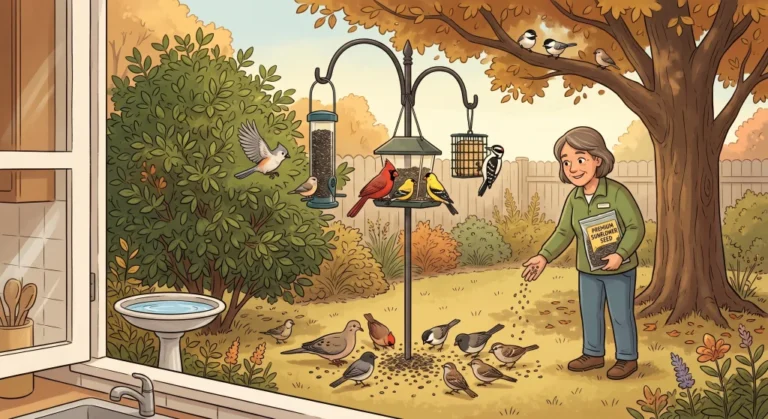
Snow can cover fallen seeds and leaf-litter feeding areas that these birds use in milder weather. A cleared patch, seed beneath an established feeder, or a low tray can make food easier to reach after a storm. The point is not that every natural food source is suddenly sealed away. It is that access changes, and a ground-level option can add birds that a hanging feeder alone does not serve well.
Field Note: One pattern I saw repeatedly at the store was a yard with plenty of activity in nearby shrubs but very little happening on the hanging feeders. When the setup added a low, stable place for millet or other suitable seed, juncos and sparrows that had already been using the yard became much easier to notice. I treat that as a placement lesson, not a guarantee: sometimes the birds are already there, but the feeder is asking them to eat in a way that does not fit their usual behavior.
White proso millet is a useful choice for many ground-feeding sparrows and juncos, while black oil sunflower remains a broad-appeal option for many feeder birds. I would not call any one seed the absolute best for every winter ground feeder because local species and preferences overlap. A simple starting point is a modest amount of millet in a low tray, then adjust based on what is actually being eaten. If sunflower is already falling from an overhead feeder, you may find some ground birds using that as well.
Warning: If you have an active rat problem, regular deer traffic, or other wildlife concerns, avoid broadcasting seed across a large area. A low platform with good drainage is easier to monitor and clean, and small portions reduce the amount left overnight. Sweep or remove uneaten seed rather than letting a damp layer build up under the feeding area.
Here is a more realistic way to think about common winter visitors. These are typical patterns, not strict rules, and regional range still matters.
| Bird Species | Typical Winter Pattern | Useful Feeder Style |
|---|---|---|
| Northern Cardinal | Year-round resident across most of its range | Hopper feeder or broad, stable platform |
| Dark-eyed Junco | Common winter visitor in much of the U.S.; some populations are resident | Ground feeding area or low platform |
| Black-capped Chickadee | Year-round resident where it occurs | Tube, hopper, or suet feeder |
| White-throated Sparrow | Winter visitor across much of the eastern and southern U.S.; year-round in parts of the Northeast | Ground feeding area or low platform |
| Woodpeckers | Varies by species and region | Suet feeder or another sturdy feeder suited to the species |
Use the table as a starting point rather than a promise that each species will choose only one feeder. Individual birds are flexible, and a cardinal can use a tube feeder with a large enough tray while a junco may pick seed from beneath several different feeders. The practical goal is to give birds more than one comfortable feeding level without turning the yard into a carpet of spilled seed.

Top-rated
Check on AmazonIf you click this link and buy, we earn a commission at no additional cost to you.
When to Start: Watch Food Availability, Not Just the Calendar
There is no universal date when a winter feeder suddenly becomes useful. You can feed birds year-round if you maintain the food and feeder properly, but many people restart or increase feeding in fall. In that situation, I pay more attention to local bird activity and seed turnover than to the first frost. A date on the calendar cannot tell you how much natural food is still available in your particular yard.
Food availability is not an on-off switch. A warm autumn may leave berries, weed seeds, and other natural foods available longer, while an early snow or ice event can make some foods harder to reach. Starting early is not automatically a waste, but filling a large feeder that birds are barely using can leave seed sitting too long. Put out less at first, watch how quickly it disappears, and increase the amount as activity builds.
Another useful clue is a change in how birds are using the yard. You may notice more flocking, more scratching beneath shrubs, more visits to seed heads, or the first seasonal juncos and sparrows arriving. Those behaviors do not prove the natural food supply is “empty.” They simply tell you that the local feeding picture is changing and that supplemental food may start getting more attention.
From what I saw at the store, seasonal patterns mattered more than any fixed start date. Some years feeders became busy early in fall, while other years natural food stayed abundant and the increase came later. That is why I use bird activity as a practical cue rather than a stopwatch. The closer you watch your own yard, the less you need a national calendar rule.
Cold snaps are the other time to pay attention. Birds spend more energy maintaining body temperature in cold weather, and snow or ice can make some natural foods harder to reach, so feeder traffic may rise. If you are already feeding, keeping food dry, fresh, and reasonably consistent through severe weather is useful. Birds generally use multiple food sources, so think of your feeder as one dependable option rather than the only thing standing between them and the night.
Why Liquid Water Can Make a Difference
If you want to keep birds coming in winter, food is only part of the setup. An open water source can attract seed-eaters as well as species that rarely care about your sunflower feeder. Winter water is especially noticeable when nearby shallow water is frozen, although birds can also get moisture from snow and other natural sources. That makes a birdbath useful, not a survival requirement.
Birds use water for drinking and bathing, and bathing is part of normal feather maintenance throughout the year. I would not frame this as “a clean bird is a warm bird,” because insulation depends on much more than whether a bird took a bath that morning. The practical point is simpler: birds visit water in winter, and keeping a safe, clean source available can add activity to a yard that already has food.
Pro Tip: If you want to add one winter feature beyond seed, a heated birdbath can be worthwhile. Eastern Bluebirds, American Robins, Cedar Waxwings, and other birds that may show little interest in seed feeders can still use open water. Keep the basin shallow and clean, and think “ice-free,” not “hot” or “steaming.” The goal is accessible water at a normal birdbath temperature.
You can use a birdbath with a built-in thermostatic heater or an immersion heater specifically rated for birdbath use. Follow the heater and basin manufacturer’s instructions, and use a ground-fault protected outdoor circuit for electrical safety. Never add antifreeze or glycerin to keep the water open because both can harm birds. Replace dirty water regularly, and if the bath freezes despite your setup, a simple plastic bowl that you bring in when it ices over is still useful.

A no-melt suet dough made with beef suet and roasted peanut pieces, staying solid up to 100F for year-round use in any climate. Fully consumable with no shells or waste, keeping feeders clean. Rich in healthy fats and protein to support daily activity, nesting, and migration. Attracts woodpeckers, nuthatches, chickadees, wrens, and other songbirds. Made in the USA.
Check on AmazonIf you click this link and buy, we earn a commission at no additional cost to you.
High Fat and High Energy: Choosing the Right Winter Suet
Cold weather raises the energy demands of staying warm, which is one reason high-energy foods become so useful in winter. Suet is based on animal fat and is especially attractive to many woodpeckers, nuthatches, chickadees, and other birds that can use a suet cage comfortably. It is not the only winter food that matters, but it fills a different role from seed and can broaden the birds using your feeding station.
I would not promise a dramatic spike in activity the moment you hang a suet cake. Local species still have to be present, find the feeder, and feel comfortable using it. What suet does give you is another food type for birds that naturally use fatty foods and insects as part of their diet. Place it where birds have a stable feeding surface, keep the feeder clean, and replace the cake if it becomes soiled or starts to smell off.
Standard suet is usually well suited to genuinely cold winter weather because low temperatures help it stay firm. During mild spells, traditional suet can soften or become rancid, so a no-melt or dough-style formula may be more practical if the product is designed for warmer conditions. Even a no-melt formula is not spoil-proof, so do not treat the label as permission to leave an old cake outside indefinitely. Choose the format that matches your weather, then judge it by firmness, freshness, and how quickly your birds are actually using it.

Aluminum base heater with built-in thermostat automatically activates below 35.6F and shuts off above 95F, keeping water ice-free down to 0F. Protected cord is safe for birds and squirrels, 59 inches long for flexible placement. Just plug in and water is warm in minutes, no maintenance needed.
Check on AmazonIf you click this link and buy, we earn a commission at no additional cost to you.
Final Thoughts on Winter Feeding
Winter feeding asks for a little more attention because snow, moisture, and cold can change how quickly food stays usable and how easily birds can reach it. The payoff is not a guaranteed crowd at the window, but a chance to see a seasonal mix that may be very different from summer. Start with dependable food, add a low feeding option if ground-foraging birds are present, and keep liquid water available if it is practical to do safely. Then let the birds in your yard tell you which part of the setup is earning its keep.
If this is your first winter feeding, avoid judging the setup by a one-week or one-month deadline. Some yards get seasonal visitors quickly, while others take longer because local bird density, habitat, weather, and neighborhood feeding patterns are different. Look for steady seed turnover, repeat visits, and the arrival of species that are actually expected in your region. Consistency helps, but the goal is a reliable supplement, not a flock that depends on your yard every day.

Wagner's Four Season Sunflower Seed is 100% black oil sunflower seed. Sunflower seed is the favorite seed of most wild birds. It is high in energy and has a thin shell making it easy for all birds to consume. Use tray feeders or hopper feeders to attract sunflower loving songbirds. Cardinals, Chickadees, Finches, Nuthatches, Woodpeckers and much more. Trust your backyard birds to the experts at Wagner’s.
Check on AmazonIf you click this link and buy, we earn a commission at no additional cost to you.
More Winter Feeding Strategies
Winter feeding gets easier once you separate the big decisions from the small ones. Food choice, seasonal timing, and normal winter feeder use each deserve a closer look when you are troubleshooting a quiet yard. These three topics go deeper without turning every winter question into one oversized checklist.
| Winter Topic | What You Will Learn |
|---|---|
| What to Feed Birds in Winter | How sunflower, suet, millet, and other useful winter foods fit different birds and feeding levels. |
| When to Start Feeding Birds in Fall | How to use local food availability, bird activity, and seed turnover instead of relying on one calendar date. |
| Do Birds Eat From Feeders in Winter? | What normal winter feeder use looks like and why activity can change during cold, snow, or ice. |
Use those deeper topics when you need to troubleshoot one part of the setup rather than changing everything at once. For most yards, the winter foundation stays simple: fresh food, feeding levels that fit the birds present, clean water when practical, and enough observation to notice what changes with the weather. That is usually more useful than chasing a rigid winter formula.
FAQs
❓ Can I stop feeding birds in the middle of winter?
Usually, yes. Feeder birds generally use multiple food sources and do not become dependent on one backyard feeder, so you do not need to taper seed over a week. During a severe snow, ice, or cold event, keeping an established feeder stocked until conditions improve can still be helpful if you are able to do it.
❄️ Does bird seed freeze in the winter?
Dry bird seed normally remains usable below freezing, but moisture can create problems. Rain or melted snow can freeze seed into clumps, and damp seed can spoil or grow mold as conditions change. Discard wet or moldy seed, dry the feeder, and refill with fresh dry food.
🐿️ Will winter feeding attract more squirrels to my house?
Many squirrels remain active through winter and may keep visiting feeders whenever food is easy to reach. Their activity varies with weather and local food availability, so winter does not automatically mean more squirrels in every yard. A properly positioned baffle, good pole placement, and cleaning up spilled seed are still the most useful controls.
🧹 Should I clear the snow off the ground for the birds?
Clearing a small patch can make food easier to find for juncos, sparrows, doves, and other ground-foraging birds after a heavy snowfall. Use only a modest amount of seed and remove leftovers so wet food does not accumulate. If rodents, deer, or other unwanted visitors are a concern, a low draining tray is easier to manage than scattering seed across the ground.