The Frustration of a Ruined Water Feature
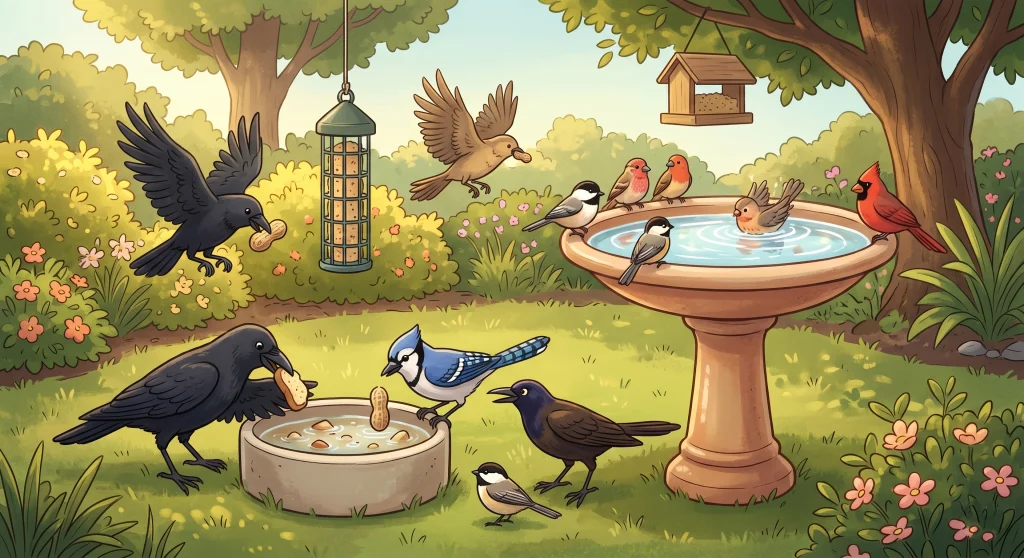
One oddly specific complaint I heard at the store was food turning up in a freshly cleaned bird bath. Bread, pet food, peanuts, and other portable items can end up in the basin after larger birds carry them to water. When you actually see a crow or grackle doing the dunking, the mystery disappears and the problem becomes much easier to troubleshoot.
Food debris can foul a bath quickly, especially when bread, suet, pet food, or other organic material starts breaking apart in warm water. I would not assume every smaller bird will automatically avoid the bath, which is exactly why you should not leave contaminated water sitting there. Dump it, remove the residue, scrub when needed, and refill with fresh water.
It is easy to read the behavior as deliberate mess-making, but there is no reason to assign that motive. Research on crows and grackles describes dunking as a food-processing behavior, especially with dry or hard items. In the larger picture of how to attract birds, treating the behavior as something to manage rather than something to punish leads to a much more useful solution.
The Biology Behind the Behavior
To stop birds dropping food in water, first separate what is documented from what is commonly repeated online. Birds do not chew with teeth the way mammals do, but the claim that crows or grackles dunk food because they lack enough saliva is not needed to explain the behavior. The stronger evidence is behavioral: dry and hard foods are dunked more often because softening them can make ingestion easier.
American Crow observations support that mechanism directly. In one study, crows dunked large pieces of dry bread more often than small pieces, while dunking unshelled peanuts did not make the shells faster to open. That points toward softening bulky dry food for easier ingestion rather than a universal rule that every hard item must be soaked.
If your bird bath is the closest convenient water source, it can become part of that food-processing routine. A bird may dip or immerse the item, retrieve it after softening, and eat it more quickly. Researchers usually describe this as dunking or a proto-tool-like food-processing technique, so I would not oversell it as literal tool use.
Field Note: When I see repeated dunking, I pay attention to two things before changing the bath: what food the bird is carrying and where it picked that food up. That usually gives you a better intervention point than trying to scare the bird away from water it has already learned to use.
Which Birds Are Using the Dunking Station?
Food dunking has been reported in a range of bird species, so it is safer not to describe it as behavior restricted to one feeding group. In backyard complaints, larger adaptable birds are simply easier to notice because they can carry conspicuous pieces of food to a bath.
Crows are one of the better-documented examples. American Crows have been observed dunking dry bread and peanuts, with large dry bread pieces dunked more often than small ones. Other corvids may show similar food-processing behavior, but if you are trying to solve a backyard problem, the useful clue is the actual item appearing in your bath and where it may be coming from.
Grackles provide even stronger experimental evidence. Studies on Carib Grackles found that dry food was dunked more than moist food and that dunking could speed ingestion. Those experiments support the softening explanation without requiring a specific story about pet food, nestlings, or choking risk in every backyard case.
If larger birds are also dominating your feeders, treat that as a separate access problem rather than assuming squirrel controls will automatically work on birds. Some feeder changes reduce access for heavier species and others do not. My discussion of how to attract birds but not squirrels is useful for thinking about selective access, but the mechanism has to match the animal you are trying to manage.

This 89-inch bird feeding station combines six hanging hooks with four included feeders, a mesh food tray, and a water bowl for a complete backyard feeding setup. Its steel pole uses a five-prong ground base for added stability, while the adjustable hooks can hold additional feeders, birdhouses, or garden accessories. The kit provides multiple feeding styles in one station and uses removable components that make routine refilling and cleaning easier.
Check on AmazonIf you click this link and buy, we earn a commission at no additional cost to you.
The Seasonal Spikes in Dunking
You may notice dunking more during some periods than others, but there is not enough basis here for a universal winter spike. Experiments on grackles show that dunking changes with the dryness and type of food, the distance to water, and the social situation around the food. Those immediate conditions are more useful to track than the month on the calendar.
Breeding season can change what adult birds carry and how often they move food, but I would not claim that spring dunking is specifically a response to nestlings facing a choking hazard without evidence from the birds in question. If you see a seasonal pattern in your yard, note the food item and its source. That tells you much more about what you can change.

Standing 94 inches tall with a 23.5-inch spread, this rust-resistant heavy-duty metal station includes a squirrel baffle, 2 large top hooks, 2 middle hooks, a metal suet feeder, tube feeder, mesh tray, water bowl, and 5-prong anchor for a complete all-in-one setup. A protective outer coating prevents rust, and every component can be repositioned or replaced without tools for effortless customization and cleaning.
Check on AmazonIf you click this link and buy, we earn a commission at no additional cost to you.
Why Conventional Deterrents Fail
When a bath is repeatedly used for dunking, chasing the bird away may interrupt one visit without changing what makes the site useful. Crows are capable learners, but the practical goal is not to win a training contest. Change the food-water arrangement so the behavior is less likely to foul the bath you want to keep clean.
A fountain or water wiggler can be useful for circulation and may attract birds, but I would not sell moving water as a reliable dunking deterrent. A bird using water to process dry food may still use a moving-water bath. If dunking continues, address the portable food and the location of the water source instead.
Emptying the main bath for weeks in an attempt to “teach” the dunking birds a lesson without addressing the food they are carrying.
Keeping the main bath clean, tracing the portable food source, and testing a separate easy-to-clean bowl closer to that food if repeated dunking continues.
The Decoy Dunking Bowl Strategy
You may be able to redirect the behavior by making a different water source more convenient, but treat this as an experiment rather than a guarantee. Grackle studies found that dunking became more frequent when standing water was close to dry food. That gives the decoy-bowl idea a reasonable behavioral basis, even though it does not prove every crow or grackle will switch bowls in a backyard.
For a decoy-bowl test, use a stable shallow container that is difficult to tip and easy to scrub and refill. Ceramic, heavy plastic, or another washable material can work. A ground-level bowl is convenient for larger birds, but place it where free-roaming cats and other local hazards do not turn the new water source into an ambush point.
Place the test bowl near the source of the food when you can identify it. That follows the same general pattern seen in grackle research, where dunking was more frequent when water was close to dry food. Do not put the bowl directly under a feeder if falling seed and droppings will immediately foul it; nearby and easy to clean is the better compromise.
Crows and grackles readily use the ground, so a low bowl may be convenient for them. What matters is whether the behavior actually changes over several visits. If the birds keep choosing the main bath, the decoy has not solved the problem and you should move on to managing the food source rather than assuming they will eventually switch.
This approach fits the broader idea behind how to attract birds to a bird bath: manage the water around real bird behavior instead of expecting every species to use one basin in the same way. If the second bowl works, you gain an easier place to clean the food mess while preserving the main bath.

Fired at 1,300 degrees, this thick ceramic tray features a smooth moss-glazed exterior and mottled bottom texture that mimics a natural mossy puddle, giving birds a sense of security while attracting more visitors. At 9.45 inches wide it works as a bird bath or ground feeder and fits most existing stands. It also doubles as a succulent or decorative planter for the garden.
Check on AmazonIf you click this link and buy, we earn a commission at no additional cost to you.
Maintaining the Decoy Station
If larger birds adopt the ground bowl, expect that bowl to get dirty quickly. Food debris and droppings are exactly the kind of contamination that makes frequent water changes important. Treat the decoy as a second bird bath that needs maintenance, not as a dirty soak bucket you can leave sitting for days.
Dump and refill the decoy bowl whenever food fouls it, which may mean daily during active dunking. Rinsing alone is not enough if grease, film, droppings, or stuck food remains. Scrub the basin as needed, rinse it thoroughly, and refill with fresh water. Even without obvious food debris, frequently refreshed bird-bath water is the safer routine.
Removing the Fuel
Sometimes the food being dunked comes directly from your own feeding setup. If the same portable item repeatedly appears in the bath, reducing or changing that item is a more direct test than trying to change the bird. Start with the food you have actually seen carried to water rather than removing everything at once.
Corvids do cache food and can remember productive feeding locations, but not every portable item is dunked before it is eaten or stored. If you see a clear food-to-water route in your yard, that observation is enough to act on. There is no need to turn it into a universal rule about how crows handle peanuts or other foods.
If the mess is getting out of control, temporarily remove the specific portable food you have seen being carried to the bath and watch whether dunking declines. Do not assume switching to sunflower, safflower, or nyjer will automatically exclude crows or jays, because larger birds may use some of those foods too. The goal is to remove the item driving the dunking behavior, not to force the flock out of the neighborhood.

Wagner's Four Season Sunflower Seed is 100% black oil sunflower seed. Sunflower seed is the favorite seed of most wild birds. It is high in energy and has a thin shell making it easy for all birds to consume. Use tray feeders or hopper feeders to attract sunflower loving songbirds. Cardinals, Chickadees, Finches, Nuthatches, Woodpeckers and much more. Trust your backyard birds to the experts at Wagner’s.
Check on AmazonIf you click this link and buy, we earn a commission at no additional cost to you.
Final Thoughts: Working With Nature
It is easy to get frustrated when larger birds repeatedly foul a bath you just cleaned. The useful shift is recognizing dunking as food-processing behavior rather than deliberate vandalism. That makes the problem easier to troubleshoot because you can change the food-water arrangement instead of trying to punish a wild bird.
A decoy bowl is worth testing because water proximity affects dunking behavior in published grackle research, but it is not guaranteed to work in every yard. Combine the test with frequent cleaning and control of the portable food source. If the main bath stays cleaner, keep the system; if it does not, remove the extra bowl and focus on the food that is being carried.
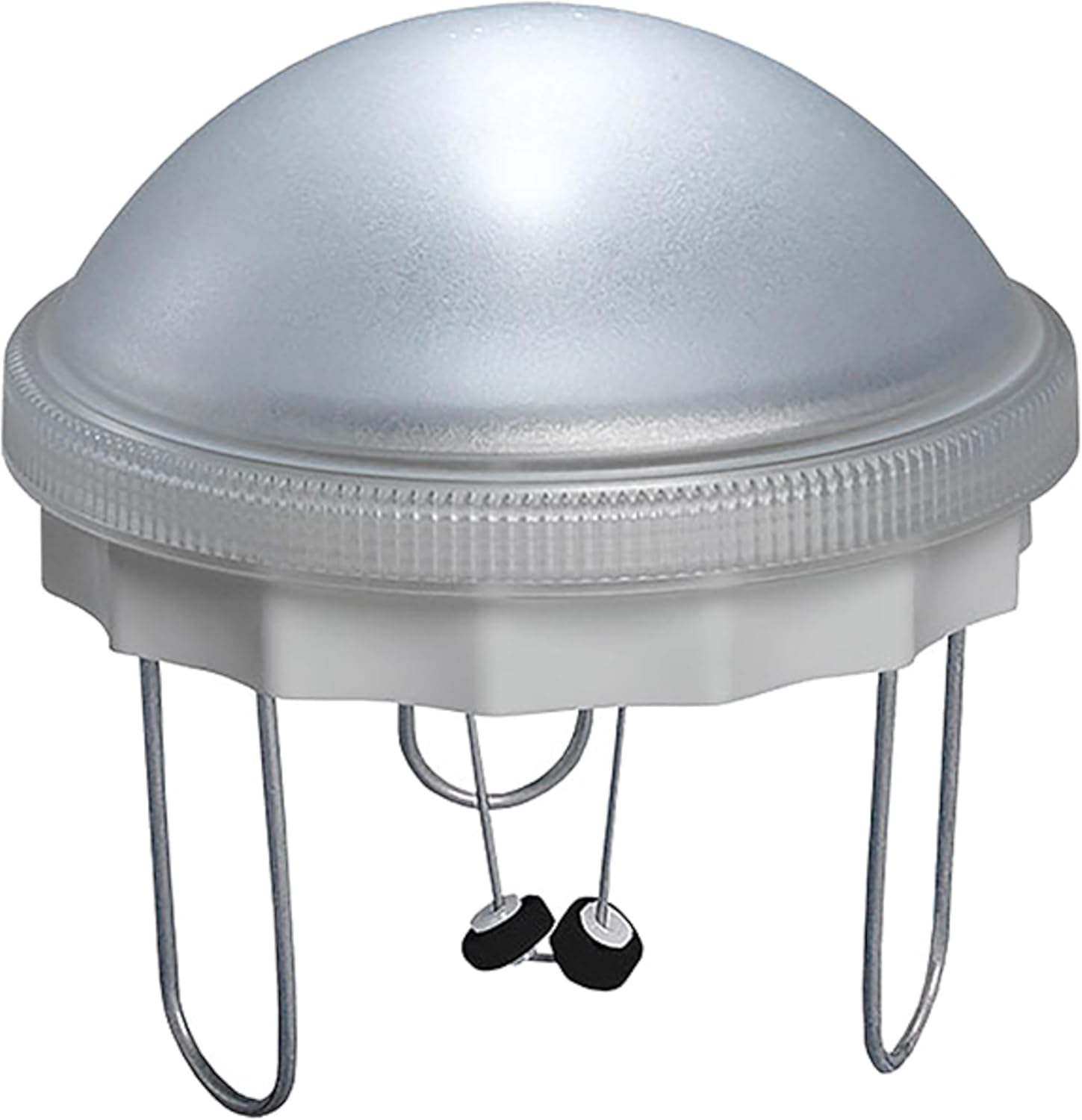
Creates gentle ripples that attract more birds to any bird bath. Circulates water silently to prevent stagnation and disease. No batteries or wiring needed, runs entirely on solar power. Fits most bird baths and works with heated baths in winter.
Check on AmazonIf you click this link and buy, we earn a commission at no additional cost to you.
FAQs
🍞 Why do birds put bread in water?
Dry bread is one of the foods used in published crow and grackle dunking research. Moistening it can make a large dry piece easier and faster to ingest. The behavior should not be explained by saying these birds lack salivary glands or by claiming the bread would otherwise scratch their throats.
🦅 Does food in the water make other birds sick?
Food debris can make a bird bath unsanitary and harder to keep clean. Rather than relying on birds to avoid contaminated water, dump it, remove residue, scrub when needed, and refill with fresh water.
💦 Will a moving fountain stop them from dunking food?
Do not count on moving water as a dunking deterrent. A fountain or wiggler can be useful for other bird-bath reasons, but a bird using water to process dry food may still use it. If the behavior continues, address the food source or test a separate bowl.
🥜 What foods are most commonly dropped in the water?
Dry bread and peanuts have been used in published crow dunking observations, and dry food is a logical target because softening can improve handling. In your yard, use the actual items you find in the bath to trace the source instead of assuming every bird is carrying the same foods.
🐕 What kind of bowl works best as a decoy?
Use a stable, shallow bowl that is difficult to tip and easy to scrub and refill. Ceramic, heavy plastic, or another washable material can work. The best bowl is the one you can keep clean and place safely near the food source without creating an ambush point for cats.