Why Your Standard Seed Feeder Rules Do Not Apply Here
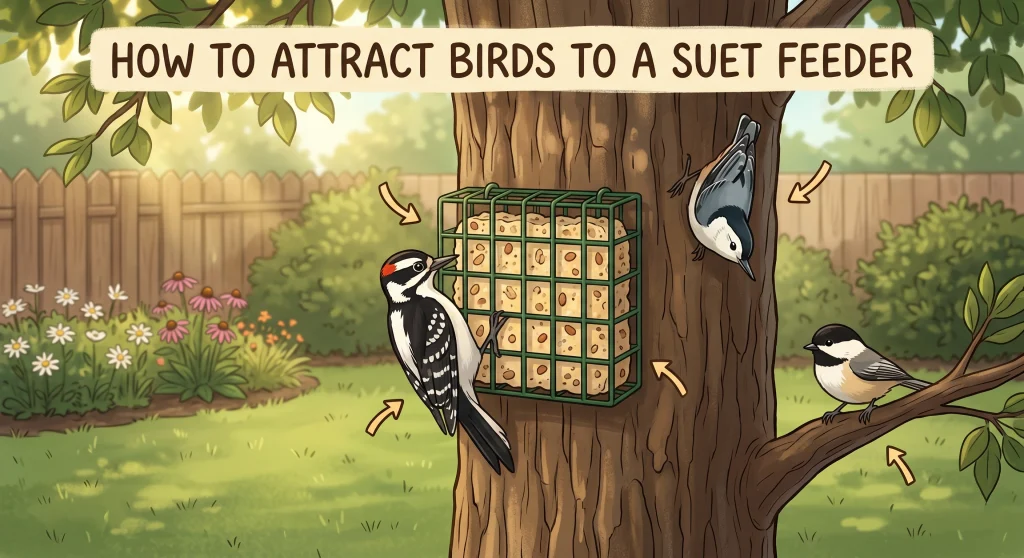
When people ask me how to attract birds to a suet feeder, I usually start by asking which birds they expect to see and whether those species are actually around. A basic wire cage can attract woodpeckers, nuthatches, chickadees, titmice, and other suet-eating visitors, but it still has to be placed where birds can approach it comfortably. A feeder hanging in a very exposed spot may get less use than one near trees or shrubs that provide perches and cover. The difference is not that suet follows an entirely separate set of rules, but that the food and feeder design appeal to a somewhat different group of birds.
Many of the birds most strongly associated with suet are comfortable clinging to bark, branches, or feeder grids. Woodpeckers often hitch along trunks and limbs, while nuthatches can move headfirst down bark and readily cling to a suet cage. That makes a stable cage near natural cover a sensible starting point, but these birds can also use suet feeders suspended from branches, poles, or other supports. I would treat placement as a way to reduce exposure and make the feeder easy to find, not as an attempt to recreate one exact wild foraging angle.
Understanding Exactly Who Eats Suet (And Who Avoids It)
Before changing your yard setup, it helps to understand who commonly eats suet. Woodpeckers and nuthatches are obvious examples because they are excellent clingers, but chickadees, titmice, wrens, jays, and several other feeder birds may also take suet depending on region and season. A basic wire cage works because many of these birds can grip the grid directly. You do not need to assume every suet visitor is a specialist tree-climber.
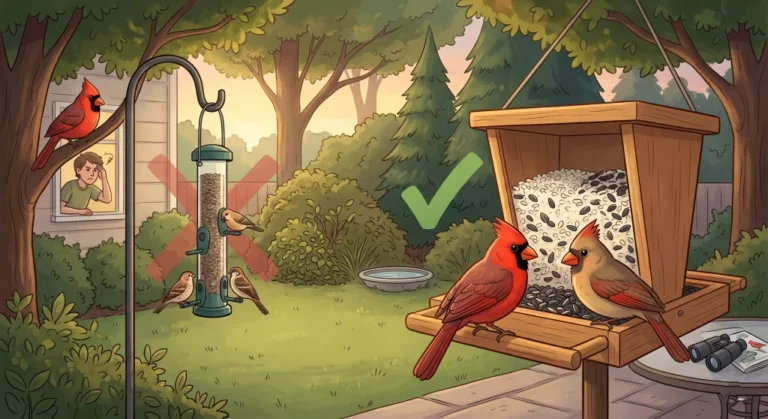
Some birds that use trays and hoppers regularly may visit a plain hanging suet cage less often because the feeder does not give them an easy landing surface. Northern Cardinals are a good example: they can eat suet in some setups, especially when a tray or perch makes access easier, but they are not the classic visitors I would use to judge whether a basic cage is working. If the feeder is attracting woodpeckers or chickadees but not cardinals, that is not a sign that the suet is failing.
Here are some of the birds I would realistically expect to see using suet, with plenty of regional variation:
- Woodpeckers: Downy, Hairy, Red-bellied, and several other woodpeckers readily visit suet feeders where they occur. Their strong feet and stiff tail feathers make clinging to a cage or support easy.
- Nuthatches: White-breasted and Red-breasted Nuthatches commonly use suet and are comfortable feeding from vertical or inverted surfaces.
- Brown Creepers: These bark-foraging birds may visit suet, although they are much less predictable feeder guests than woodpeckers or chickadees.
- Chickadees and Titmice: These small, agile birds readily cling to cage feeders and often take suet, especially when natural food is less abundant.
- Wrens: Carolina Wrens and some other wrens may use suet where their ranges overlap your yard, particularly when the feeder offers an easy approach.
Field Note: I have seen quiet suet feeders start getting attention after a simple relocation, especially when an exposed feeder was moved closer to the trees birds were already using. I do not treat a tree trunk as a guaranteed fix, though. The useful pattern is that a stable feeder near familiar cover is often easier for cautious birds to investigate.

A compact metal suet cage feeder measuring 5.3 x 1.8 inches, fitting one standard suet cake or slice of bread. Powder-coated for rust resistance with a secure lock-bolt door. Can be hung freely or mounted on trees, walls, fences, bird houses, or other feeders via pre-drilled screw holes on all six sides. Highly versatile for DIY feeder builds.
Check on AmazonIf you click this link and buy, we earn a commission at no additional cost to you.
Where to Place a Suet Feeder Birds Will Actually Use
Placement matters, but I would not reduce success to one height or one approach angle. Woodpeckers and nuthatches spend a great deal of time foraging on trunks and branches, which is one reason a tree-mounted cage can work well. They also readily use suspended suet feeders when the feeder is stable and the surrounding area gives them useful perches and cover. The practical problem with a very exposed or wildly swinging cage is not that it violates a natural height rule, but that it can be harder for birds to approach and use confidently.
If the feeder is being ignored, try moving it closer to a tree or shrub the birds already use, or mount it securely to a trunk if that fits your yard. I prefer enough height to reduce easy access for dogs and other ground-level trouble, while still keeping the feeder practical to refill and clean. There is no universal three-to-four-foot sweet spot for woodpeckers, and a branch-hung or pole-mounted cage can work perfectly well. Change one variable at a time so you can tell whether location was actually the issue.
Sometimes, a quiet suet block is part of a larger issue with how to attract birds to your feeder in general. If the entire yard is exposed and the feeder sits far from any useful cover, birds may take longer to investigate it. A nearby tree or shrub can provide a staging perch and quick refuge, but the cage does not need to be pinned against bark to work. What matters is a sensible combination of visibility, stability, cover, and safe access.
Picking the Right Blend for the Season
Temperature matters because raw and rendered suet behave very differently as weather warms. Raw suet can become rancid quickly outside cold winter conditions, while rendered commercial suet holds up much better. Even rendered or no-melt products can soften or spoil in high heat, so I pay attention to the condition of the food rather than relying on one calendar date.
In warm weather, the stop sign is suet that is softening, going rancid, or coating feathers. Commercial no-melt or suet-dough formulas can hold their shape better than raw suet, but I still keep them shaded, check them frequently, and remove them if they become greasy or spoiled. In very hot conditions, even rendered suet can soften enough to foul feathers, so switching formulas is not a license to ignore the weather. Freshness and physical condition matter more than a rigid eighty-degree cutoff.
| Suet Type | Best Season | Primary Target Birds |
|---|---|---|
| Raw / Plain Suet | Cold weather only | Woodpeckers, Nuthatches, Chickadees |
| Peanut / Tree Nut Blend | Cool weather, or warm weather if the formula stays firm and fresh | Woodpeckers, Nuthatches, Chickadees, Jays |
| Mealworm / Insect Blend | Any season when the product remains fresh | Wrens, Chickadees, Titmice, some Woodpeckers |
| No-Melt Suet Dough | Warm weather, with regular heat and spoilage checks | Many common suet-feeding species |
Choose the blend for the birds you want to reach, but let temperature and freshness decide whether it should stay outside. I would rather remove a soft or rancid cake than keep feeding it simply because the package says year-round. Suet is useful only while it remains clean, firm enough to handle safely, and free of spoilage.

A protein-rich no-melt suet dough blended with roasted peanuts, pecans, almonds, and walnuts. Stays solid up to 100F, making it ideal for year-round feeding in any climate. Especially attractive to woodpeckers and other suet-loving birds. Works with any standard wire suet feeder. Made in the USA. Available in multiple flavors including peanut, berry, apple, hot pepper, and sunflower.
Check on AmazonIf you click this link and buy, we earn a commission at no additional cost to you.
Dealing with Starlings and Unwanted Guests
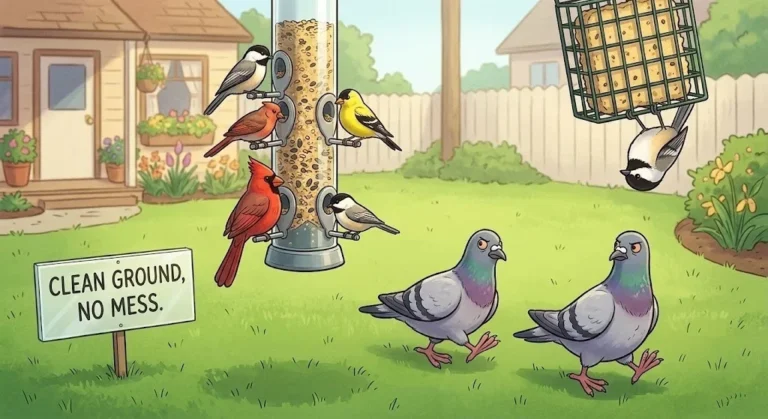
An untouched cake is frustrating, but a suet feeder monopolized by European Starlings creates the opposite problem. Starlings readily eat suet and can dominate a feeder when they arrive in numbers, sometimes displacing smaller birds. If that is happening, changing the feeder design is usually more useful than trying to scare the flock away repeatedly. The goal is to make access easier for agile clinging birds without claiming any design is completely starling-proof.
One useful design is an upside-down suet feeder, where the food is accessible from the bottom rather than the side. Woodpeckers and nuthatches are especially comfortable feeding in inverted positions, while the design can discourage starlings and some other larger visitors. I would describe it as a filter that shifts the odds, not as a test of weak versus strong legs.
When looking for an upside-down feeder, the design matters. A covered top can help shield the cake while the access grid underneath favors birds that readily cling upside down. Some starlings may still figure out difficult feeders, so watch what actually happens in your yard before assuming the problem is solved. If the cake remains accessible to your target birds and lasts longer, the design is doing its job.

An upside-down suet feeder that naturally deters nuisance birds like blackbirds and grackles, while welcoming woodpeckers, titmice, nuthatches, and chickadees that feed comfortably in an inverted position. Built from naturally rot-resistant cedar with stainless steel screws for lasting durability. Holds 1 standard suet cake.
Check on AmazonIf you click this link and buy, we earn a commission at no additional cost to you.
Final Thoughts: Setting Expectations for Your Woodpecker Station
A new suet station can take time to get noticed, and the wait varies with the birds present, season, surrounding habitat, and whether local birds already use feeders. I would not use one or two weeks as a universal deadline, and I would not assume a tree-mounted feeder is automatically perfect placement. If the food is fresh and the feeder is stable near useful cover, give it time before making another change. A quiet first stretch does not by itself mean the setup has failed.
Once birds begin using the feeder, repeated visits can make the station feel much less mysterious. Understanding how to attract birds effectively often comes down to offering a consistent resource and then watching what the birds in your own yard actually prefer. Keep the suet fresh, use a feeder design that suits the visitors you want, and place it where birds can approach without crossing a wide exposed gap. Those basics matter more than forcing every yard into the same height or tree-trunk formula.

A no-melt suet dough made with beef suet and roasted peanut pieces, staying solid up to 100F for year-round use in any climate. Fully consumable with no shells or waste, keeping feeders clean. Rich in healthy fats and protein to support daily activity, nesting, and migration. Attracts woodpeckers, nuthatches, chickadees, wrens, and other songbirds. Made in the USA.
Check on AmazonIf you click this link and buy, we earn a commission at no additional cost to you.
FAQs
🐦 Can I leave suet out all year round?
Rendered commercial suet can be offered beyond winter if it stays firm and fresh, but raw suet is best reserved for cold weather. No-melt formulas tolerate warmth better, yet they can still soften or spoil in high heat. Keep suet shaded when possible and remove it whenever it becomes greasy, rancid, or soft enough to coat feathers.
🌳 Does the type of tree matter for placement?
No specific tree species is required. A trunk can be a convenient mounting surface because woodpeckers and nuthatches already use trees as foraging and staging sites, but the feeder itself provides the grip they need. Choose a location with stable support, useful nearby cover, and enough clearance to keep the feeder practical to clean and refill.
❄️ Why is suet so important in the winter?
Suet is an energy-dense food, which is one reason woodpeckers, chickadees, nuthatches, and other birds use it heavily in cold weather. It can supplement the insects, seeds, and other natural foods they are already finding. I would think of it as one useful high-energy option, not something birds require in order to survive winter.
🦅 Will a suet feeder attract hawks?
The suet itself is not the attraction for a hawk, but any feeder can concentrate potential prey in one place. Nearby trees or shrubs can give smaller birds a quick refuge, although very dense low cover can also create ambush opportunities for cats. If a hawk begins repeatedly hunting the station, a temporary break from feeding may be more useful than moving the suet a few feet.
🐿️ How do I keep squirrels off the suet block?
Commercial hot-pepper suet can discourage squirrels because birds are far less sensitive to capsaicin than mammals, but results are not perfectly consistent. I would treat it as one option rather than a guaranteed fix. A baffled pole, harder-to-reach feeder position, or squirrel-resistant feeder design may still be necessary in a yard with persistent squirrels.