Bringing the Feeding Station to Your Balcony
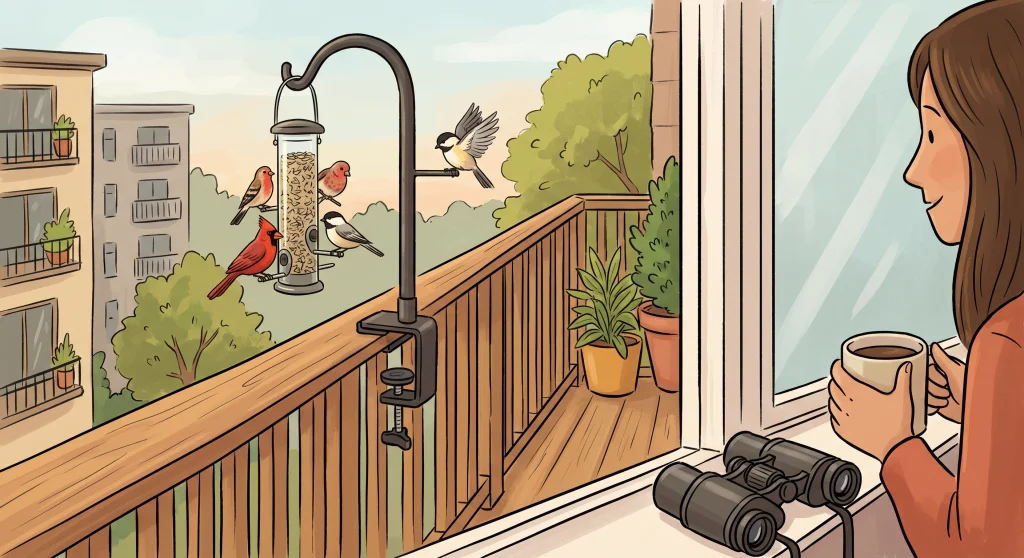
You do not need a sprawling lawn to have an active and diverse bird feeding station. A deck mount bird feeder pole does everything a traditional ground pole does, but without requiring any digging or heavy landscaping. I have found that for many people, bringing the birds directly to the deck railing actually provides a much better viewing experience than placing a pole at the far edge of the grass.
Most of these systems rely on a heavy-duty bracket that wraps around your existing deck handrail. You simply slide the bracket over the wood, then tighten a hand knob until the metal plate bites securely into place. This creates a vertical mounting point for a shepherd’s hook or a multi-hook station right at eye level. It seems like a foolproof solution straight out of the box.
However, skipping the basic math before ordering is where most beginners go wrong. A balcony bird feeder mount operates under entirely different physical rules than a pole buried deep in the dirt. If you treat a deck clamp like an industrial ground pole, you will quickly damage your railing, spill expensive seed, and frighten away the birds you are trying to attract.
When to Choose a Deck Mount (And Which Style)
Deck mounts are the ideal choice if you rent an apartment, live in a condo, or have a tiny yard where placing a pole 10 feet away from jumping squirrels is physically impossible. However, if you do have a large open lawn, a traditional ground pole is almost always the superior choice simply because it can safely hold much more weight.
If a deck setup is your best option, you need to choose the correct bracket style for your specific architecture. Standard C-clamps are the most common and work perfectly for flat, squared wooden railings. If your balcony features round wrought-iron bars or curved metal rails, a flat C-clamp will slide and pivot. For curved metal, you must look specifically for a U-bolt style bracket that wraps completely around the circular bar and locks it in place.
The Two-Inch Rule for Railing Compatibility
Once you know a deck mount is right for your situation, the very next step is sizing. From what I have seen over the years, the number one reason these mounts get returned to the store is a simple mismatch in dimensions. People assume that a clamp is universally adjustable and will fit whatever lumber happens to be holding up their patio.
According to a December 2025 hardware review by familyhandyman.com, backed up by guidance from birdsaffection.com in early 2026, standard deck-clamp poles are manufactured to fit a typical 2-inch thick wooden railing. This matches standard dimension lumber perfectly. However, if your deck uses modern, oversized composite top caps, decorative ironwork, or unusually thick custom wood, a standard clamp simply will not slide over it. You cannot force a fixed piece of steel to open wider than its welded frame allows.
Field Note: I constantly had customers come into the shop carrying a brand new clamp mount, highly frustrated because it was half an inch too narrow for their custom cedar railing. They had spent hours picking out the perfect feeder, only to realize the mounting bracket was physically incompatible with their deck.
If your railing is thicker than two inches, you must seek out a specialized extra-wide deck railing bird feeder mount. Do not attempt to balance a standard clamp awkwardly on the edge of a thick rail, as the slightest breeze will knock the entire assembly down.

This rust-resistant metal hook adjusts from 27 to 39 inches and clamps onto railings up to 2.2 inches thick with no tools required. A 360-degree rotating bearing makes hanging and repositioning bird feeders, baskets, wind chimes, and lanterns effortless, while also automatically relieving tension in high winds to prevent twisting. Please measure your railing before purchasing to confirm compatibility.
Check on AmazonIf you click this link and buy, we earn a commission at no additional cost to you.
Weight Limits and Wind Torque
Even with the perfect bracket fitting snugly on your railing, you still have to respect the physical limitations of the hardware. A ground pole driven two feet into compact dirt can hold an enormous amount of weight. A deck clamp cannot. When you use a clamp, you are relying entirely on the friction of a metal screw pressing against a wooden plank.
This limitation becomes highly noticeable if you live in a multi-story building. The wind load on a third-floor balcony is drastically stronger than at ground level. When a heavy wooden hopper feeder swings in that high wind, it exerts a massive twisting force on the vertical pole. This torque transfers directly down to the clamp. A heavy setup will slowly twist the clamp off the wood, scratching the paint and eventually dropping your feeder to the floor.
Based on typical manufacturer ratings and my own shop experience, here is what you can realistically expect from different mounting systems:
| Mounting System | Typical Max Weight | Best Feeders to Use | Risk of Tipping |
|---|---|---|---|
| Standard Deck Clamp | 10–15 lbs | Tube feeders, suet cages, nectar dishes | High if overloaded |
| Heavy-Duty Deck Clamp | 15–20 lbs | Medium hoppers, small trays | Medium |
| Ground Auger Pole | 30+ lbs | Large hoppers, multi-arm setups | Very Low |
Pro Tips: Always calculate the total working weight of your setup. A large tube feeder might weigh two pounds empty, but once you add five pounds of sunflower seed and the weight of six landing birds, you are approaching the limit of a cheap clamp. Leave yourself a healthy margin of safety.
Verifying the No-Drill Claim for Your Material
The primary appeal of a no drill bird feeder pole deck system is that it leaves your property pristine. This is absolutely critical if you rent your home or live in a neighborhood with a strict homeowners association. However, tightening a bare metal screw directly onto your railing can still cause permanent damage if you are not careful.
Soft woods like cedar or pine will dent easily under the pressure of a metal clamp. Even worse, if you have a hollow vinyl or modern composite railing, tightening a clamp too aggressively can crack the outer shell of the material. A cracked vinyl railing is an incredibly expensive mistake to fix.
The solution is simple but essential. Always place a thin rubber pad, a scrap piece of leather, or a wooden shim between the metal clamp and your railing. This distributes the pressure evenly and prevents the metal teeth from biting into your finish. Before you lock in your final decision, reviewing all your bird feeder pole options ensures you are not forcing a clamp into a situation where a freestanding patio base would be safer.

Kaytee Sunflower Hearts & Chips attract more birds than any other seed. This highly nutritious food is made with 100% edible sunflower hearts, and the hulls have been removed to make it easier for birds to eat. This means less mess for you and more energy for your feathered friends.
Check on AmazonIf you click this link and buy, we earn a commission at no additional cost to you.
Managing Mess in Tight Apartment Spaces
Using a bird feeder pole for deck observation comes with a unique set of social challenges. When you hang a feeder over a balcony edge, whatever the birds drop lands directly on the patio below yours. If you use cheap mixed seed, the birds will toss the filler seeds overboard, instantly creating a mess that will anger your neighbors.
Because weight and mess are such major factors on a balcony, you must be highly selective about which bird feeder types you choose to hang. A lightweight tube feeder filled exclusively with hulled sunflower hearts is the perfect pairing for a clamp mount. The seed leaves zero waste, and the feeder itself will not overstress the metal bracket.
Suet cages are another excellent choice for deck mounts, provided you use no-melt dough in the summer to prevent grease from dripping onto your handrail.

6 feeding ports with perches let multiple birds feed at once. Transparent 2 lb seed chamber makes it easy to see when to refill, with a simple flip-top lid for quick access. Built-in drainage keeps seed dry and mold-free. Works with sunflower, nyjer, safflower, mixed seed, and more. A great gift for any bird lover!
Check on AmazonIf you click this link and buy, we earn a commission at no additional cost to you.
Final Thoughts: Setting Up for Success
A deck railing mount is a specialty piece of hardware. It excels in tight spaces and apartments, but it requires more careful planning than a standard yard pole. For most apartment birders, the sweet spot is a heavy-duty deck clamp paired with a single lightweight tube feeder. This combination gives you fantastic views without stressing your architecture or annoying the neighbors.
When you are ready to set up your balcony station, keep these rules in mind:
- Measure First: Confirm your railing is under the typical 2-inch maximum thickness before purchasing anything.
- Pad the Clamp: Protect your wood or vinyl railing with a rubber shim to prevent pressure dents.
- Keep It Light: Avoid massive wooden hoppers and stick to lightweight tube and suet feeders.
- Maintain the Threads: If you live in a cold climate, apply a drop of oil to the clamp screw in late fall so it does not rust and seize up over the winter.

Squirrel weight automatically closes the shroud to block seed access, saving money on wasted feed over time. Chew-proof construction with 4 staggered ports and thick U-shaped metal perches for comfortable multi-bird feeding. Patented ventilation keeps seed fresher longer. Tool-free disassembly for easy cleaning. Works best with sunflower, safflower, and dried mealworms. Backed by live phone support Monday to Friday.
Check on AmazonIf you click this link and buy, we earn a commission at no additional cost to you.
FAQs
📏 Will a deck clamp fit over a curved metal railing?
Most standard C-clamps are designed for flat, squared edges. If you have a round wrought iron railing, look specifically for a U-bolt style bracket that can grip a curved surface securely without slipping.
🐿️ Does a deck pole stop squirrels from reaching the seed?
Usually not. Squirrels are excellent climbers and will simply use your deck railing as a highway. To keep them away, you will need to use a weight-sensitive feeder hung from your shepherd’s hook.
💨 Can high winds tear a clamp off the deck?
Yes. If you have a bulky feeder attached to the pole, strong winds will create intense leverage. During severe storms, it is best practice to unhook the feeder and bring it inside until the weather passes.
🏢 Are clamp mounts allowed by apartment HOAs?
Rules vary widely between buildings. While the no-drill clamps prevent property damage, many associations ban feeders entirely due to the seed mess. Always check your local bylaws before setting up a station.