
Woodpeckers Skip Most Suet Feeders Because of Where They Hang
You can buy the most expensive high-energy suet blocks on the market, load them into a brand-new cage, and still watch your local woodpeckers fly right past it. If you are trying to figure out why your suet feeder is sitting untouched—or worse, being devoured entirely by a flock of starlings in under an hour—you need to look at how it is mounted. Woodpeckers skip most suet setups simply because the feeder is in the wrong position.
I saw this happen constantly at the store. Someone would come in, frustrated that they had spent good money on woodpecker supplies, only to have the birds ignore the setup completely. Usually, they had hung their suet cage from a shepherd’s hook right next to their tube feeders, about six feet off the ground in the middle of the lawn. They were treating a suet feeder exactly like a standard seed feeder, assuming all birds want to fly into open space to land on a hanging object.
It sounds logical, but in practice, woodpeckers are not perching birds. They are tree-climbing foragers. When you place a suet cage out in the open on a swinging pole, you are asking them to feed in a way that feels completely unnatural to their biology. Once you stop treating suet like seed and start matching your setup to the specific birds you want to attract, the activity at your feeder will completely change.
How Suet Feeders Actually Work: Cages vs. Logs
Unlike standard seed dispensers that rely on gravity to drop food into ports or trays, a suet feeder has a very simple job: hold a block of rendered fat securely while birds rip pieces off of it. Because suet is soft and malleable, the feeder only needs to provide a gripping surface for the bird and a barrier that prevents larger animals from running off with the entire block.
The standard suet cage bird feeder is just a vinyl-coated wire box with a latch. It is inexpensive, easy to clean, and fits the standard square suet cakes sold in every hardware store. The grid spacing is large enough for a beak to pass through, but tight enough that the suet stays contained even as it gets whittled down. However, the basic wire cage offers absolutely no weather protection and is accessible from all sides, which means any bird that can grab the wire can eat the fat.
When you start looking at the broader landscape of bird feeder types, you will notice that suet setups are uniquely designed for clinging birds like woodpeckers, nuthatches, and creepers. These birds do not need horizontal perches. They are built to hold onto vertical surfaces. This is why some people bypass wire cages entirely in favor of log feeders, which mimic their natural foraging environment perfectly.
Single vs. Double Cake Suet Cages
Once you understand the basic wire cage, the next hardware decision is capacity. Most beginner setups use a single-cake feeder, which holds one standard suet block. This is perfectly fine for a yard with average activity, but it has limitations during peak seasons.
If you live in a cold climate where birds consume massive amounts of calories to stay warm, or if you successfully attract a large woodpecker population, a single cake can disappear in two days. A double-cake cage—either stacked vertically or side-by-side—solves the constant refilling problem. Vertical double cages are particularly effective for large species like pileated woodpeckers, as the elongated design gives them more surface area to brace their stiff tail feathers against while feeding.

Taller grid design gives woodpeckers and small birds plenty of room to grip and perch comfortably. Bottom board with drainage hole catches falling crumbs to keep your garden clean and reduce waste. Flip-top lid refills in seconds with one hand, no need to take the feeder down. Available in copper, black, brown, and green.
Check on AmazonIf you click this link and buy, we earn a commission at no additional cost to you.
Placement: Why the Tree Trunk Beats the Pole
If you want to attract woodpeckers, the single biggest improvement you can make has nothing to do with buying the best suet feeder on the shelf. It has entirely to do with taking your current feeder off the pole and moving it to a tree.
Woodpeckers approach food from the side or from below, hitching their way up a tree trunk. A standalone pole set five or six feet high out in the open offers them no camouflage and forces an awkward flight path. They prefer the security of heavy bark and the ability to duck behind the trunk if a hawk flies over. When you strap a suet cage directly to a tree trunk—ideally about three to four feet off the ground—you are presenting the food exactly where they are already looking for it.
Field Note: I routinely talked to customers who were about to throw their suet feeders in the trash because they hadn’t seen a single downy or hairy woodpecker in months. I would tell them to take the cage off their metal pole, walk over to the nearest mature oak or maple, and secure it flat against the trunk at waist height. In almost every case, they came back a week later to report that the woodpeckers had found it within forty-eight hours.
This height rule—three to four feet high on a solid trunk—goes against everything we usually teach about keeping feeders high up to avoid predators. But for woodpeckers specifically, this low, trunk-mounted placement taps directly into their natural foraging instincts. You are essentially letting the tree act as the largest, most comfortable perch possible.
The Upside-Down Design: A Simple Fix for Starlings
If you feed suet for any length of time, you will inevitably run into the European starling. A flock of starlings can devour a fresh block of suet in a single afternoon, leaving nothing for the native birds you are actually trying to feed. Many people assume they need a complicated, expensive cage to stop this, but the solution is actually structural.
The fix is an upside down suet feeder. These feeders have a solid roof and solid sides; the only exposed wire grid is on the bottom. To eat, a bird must physically hang upside down beneath the feeder. This exploits a fundamental difference in bird anatomy.
Starlings have standard feet designed for grasping horizontal branches. They lack the specialized toe arrangement and tail strength to comfortably hang fully inverted for more than a few frustrated seconds.
Woodpeckers and nuthatches have zygodactyl feet (two toes pointing forward, two pointing backward). This acts like a locking mechanism, allowing them to hang upside down effortlessly while using their stiff tail feathers for balance.
Switching to this bottom-feeding design instantly removes the starling problem. It usually costs about $12 to upgrade to a basic upside-down cage, and it pays for itself within a month just from the suet you save.

An upside-down suet feeder that naturally deters nuisance birds like blackbirds and grackles, while welcoming woodpeckers, titmice, nuthatches, and chickadees that feed comfortably in an inverted position. Built from naturally rot-resistant cedar with stainless steel screws for lasting durability. Holds 1 standard suet cake.
Check on AmazonIf you click this link and buy, we earn a commission at no additional cost to you.
The DIY Log Suet Feeder
If you don’t want to buy a wire cage at all, the most natural suet feeder you can possibly put in your yard is one you make yourself. A log feeder uses a small section of a natural tree branch, about three inches in diameter and a foot long.
- The build: You simply drill several one-inch diameter holes into the wood, spaced randomly along the sides. Add an eye-hook to the top for hanging.
- The fill: You pack those drilled holes tightly with soft suet dough or suet plugs.
- The result: Woodpeckers land on real bark, use their tails exactly as they would in the wild, and chisel the fat out of the holes.
Because the suet is recessed inside the wood, it is naturally protected from the rain and sun. Starlings struggle with it because there is no wire mesh for their awkward feet to grab onto. It is cheap to make, highly effective, and blends perfectly into a backyard landscape.
While a log feeder is fantastic for a natural look, it is usually best used in combination with a standard wire cage setup. Having both gives you the flexibility to easily swap out commercial blocks and ensures you have a backup when the log inevitably weathers down.

This 12-pack contains 36 insect suet plugs designed for use in log-style suet feeders. The formula includes rendered beef suet, ground peanuts, finely cracked corn, dehydrated mealworms, and peanut butter to provide an energy-rich food source for wild birds. The cylindrical plugs make refilling straightforward and are especially suitable for woodpeckers, nuthatches, chickadees, and other suet-feeding birds.
Check on AmazonIf you click this link and buy, we earn a commission at no additional cost to you.
Weather Protection: Keeping Suet Solid
Whether you use a natural log or a commercial wire cage, the weather is the hardest thing on your suet setup. A basic wire cage exposes the fat block to baking summer sun and driving rain. When suet gets repeatedly soaked, it turns rancid and molds. When it gets baked in direct sunlight, the rendered fat melts, dripping onto the ground and matting the feathers of the birds trying to eat it.
Enclosed cage designs with solid, extended roofs are essential if you plan to leave suet out year-round. The roof acts as an umbrella, extending a few inches past the cage to shed rainwater. In the summer, even if you buy heat-resistant suet, that roof provides critical shade. A suet feeder for woodpeckers needs to be reliable, and a block of liquid, rancid fat is exactly the opposite.
Exploring Your Suet Options
Choosing the right suet setup ultimately depends on what problem you are trying to solve in your specific yard. Whether you need to deter a massive flock of starlings, keep the fat from melting in July, or just figure out which cage design the woodpeckers actually prefer, the hardware makes the difference. I have broken down the specific solutions for these common situations in the guides below.
| Suet Feeder Guide | What It Covers |
|---|---|
| Best Suet Feeder for Woodpeckers | Selecting cages and mounts specifically tailored to attract clinging, bark-foraging birds. |
| Upside Down Suet Feeder Mechanics | How foot anatomy allows woodpeckers to eat while completely locking out perching starlings. |
| Melt Proof Suet Feeder Setup | Hardware and placement solutions to keep suet from turning into a liquid disaster in the summer heat. |
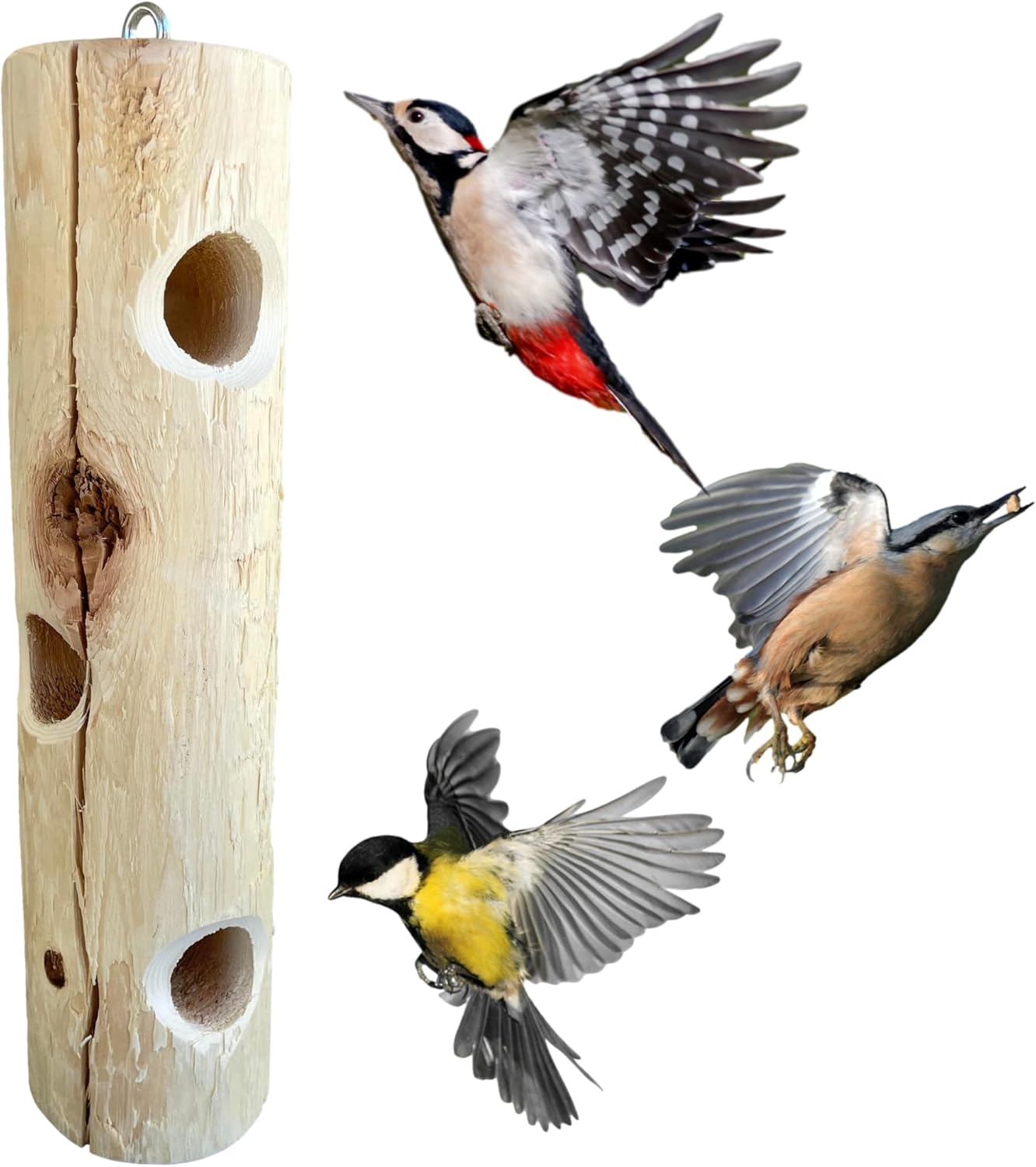
Real cedar log with 3 holes for suet plugs or suet balls, attracting woodpeckers, chickadees, nuthatches, titmice, and creepers. Rough wood grain gives birds a natural surface to cling and perch. Weather-resistant and develops natural cracks over time that create habitat and draw more birds. Simply press suet into holes and hang at least 5 feet up.
Check on AmazonIf you click this link and buy, we earn a commission at no additional cost to you.
Match the Feeder to the Bird’s Anatomy
Trying to force a tree-climbing bird to eat from a swinging metal pole is always going to end in frustration. When you address suet feeder starlings by changing the orientation of the cage, or when you move a basic wire basket off a pole and onto the rough bark of an oak tree, you stop fighting against nature. You don’t need a massive, complicated setup to succeed with suet. You just need a setup that respects how the birds you want to see are built to survive.
FAQs
🦅 Will a suet feeder attract hawks?
A suet feeder itself does not attract hawks, but the concentration of small birds gathered around the feeder will. If you notice a hawk hunting at your feeding station, take the suet cage down for a week or two to encourage the hawk to move on to a different hunting ground.
🐿️ How do I keep squirrels out of a suet cage?
Squirrels will easily chew through plastic suet cages and can reach their paws through standard wire grids. The best defense is mounting the suet feeder on a baffled pole using the 5-7-9 rule, or using hot pepper suet (a strategy covered fully in our guide to suet for birds), which birds cannot taste but squirrels absolutely hate.
🧼 How often should I wash my suet feeder?
You should wash wire suet cages every time you put a new block in, or at least every two weeks. Rendered fat leaves a greasy residue that traps bacteria and mold spores very quickly, especially in humid or wet weather.
❄️ Do birds need suet in the summer?
Birds appreciate the high-calorie energy of suet year-round, especially when feeding nestlings in the spring and summer. However, you must switch to a commercial no-melt dough—which we break down in our suet food guide—and keep the feeder completely shaded so the fat doesn’t turn rancid or drip onto their feathers.