The Quick Fix Depends on Whether the Seed Is Wet
Start by looking closely at the seed around the blocked port. If it is dry, smells normal, and has simply bridged across the opening, you may be able to clear the jam without a full teardown. If the seed is damp, sticky, sour-smelling, sprouting, or visibly moldy, skip the shortcut. Cornell and Project FeederWatch both emphasize keeping seed dry and discarding wet or moldy food rather than continuing to serve it.
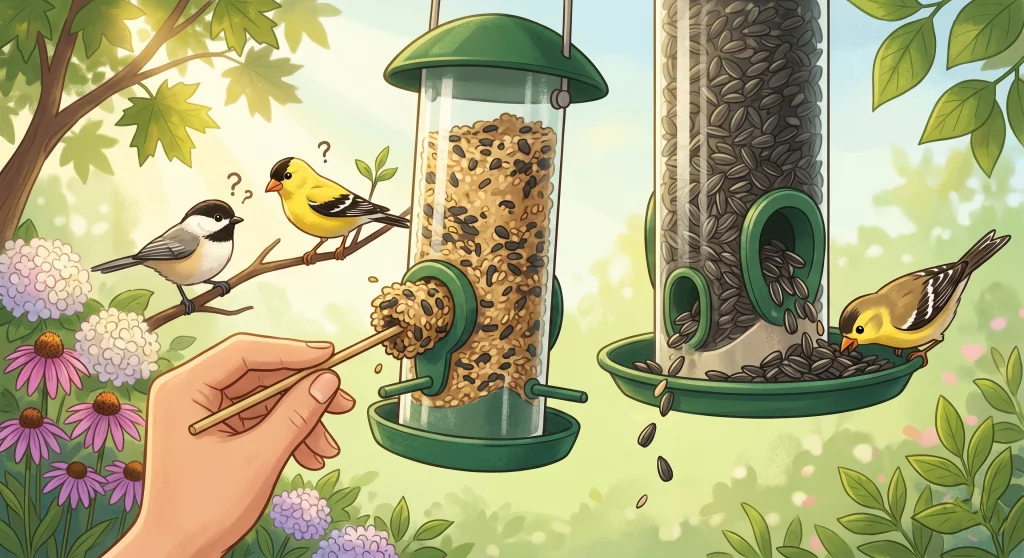
For a dry mechanical jam, take the feeder down so you can work on it safely and use a clean wooden skewer or other blunt tool that will not scratch the feeder coating or damage the port. Gently loosen the bridge from the opening rather than ramming a sharp wire deep into the reservoir. If the seed starts flowing normally and still looks and smells fresh, you can return the feeder to service after checking that the port and drainage path are clear.
Do not use a skewer to rescue a wet plug and then leave the rest of that seed in the feeder. Moisture can spread beyond the visible clump, and harmful mold may not be limited to one obvious patch. If wet seed caused the blockage, empty the feeder, discard the affected food, clean away the residue, let the feeder dry completely, and refill with fresh seed.
Field Note: I often heard from customers who thought a new feeder had failed because seed stopped moving through one or two ports. A quick mechanical check could reveal a simple dry bridge, but I would treat a rain-soaked clump differently. Once moisture had reached the food, the useful fix was to remove the questionable seed and solve the water problem instead of trying to save every grain.
Even a successful quick fix only tells you that the port was blocked. If the same feeder jams repeatedly, look for a repeatable cause such as moisture, poor drainage, a seed mix that does not flow well through that feeder, compacted debris, or damaged hardware.
Why Is the Seed Stuck in the Bird Feeder?
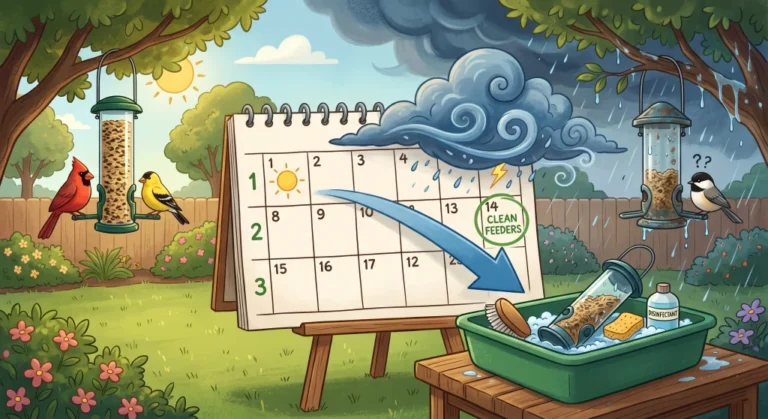
Moisture is one of the most common reasons seed stops flowing. Rain can enter around ports, lids, seams, or trays, and damp seed can swell, clump, and stick together with fine seed dust and hull fragments. Cornell warns that seed spoils more easily when it gets wet, especially in warm weather, so a moisture-related clog is also a food-quality problem rather than only a mechanical nuisance.
Feeder design can make the problem better or worse. Drainage holes, screened bottoms, sheltered ports, and a lid that sheds rain all help keep food from sitting in trapped moisture. If you are constantly battling wet, clumping seed, the broader bird feeder seed problems may be coming from the feeder itself rather than from one bad batch of seed.
Warning: If the seed is wet, sour-smelling, sprouting, or visibly moldy, do not poke the clog loose and keep feeding it. Discard the affected seed, take the feeder apart as designed, clean away old food and residue, rinse thoroughly, and let it dry completely before refilling.

6 feeding ports with perches let multiple birds feed at once. Transparent 2 lb seed chamber makes it easy to see when to refill, with a simple flip-top lid for quick access. Built-in drainage keeps seed dry and mold-free. Works with sunflower, nyjer, safflower, mixed seed, and more. A great gift for any bird lover!
Check on AmazonIf you click this link and buy, we earn a commission at no additional cost to you.
The Seed-to-Port Size Mismatch
A feeder can also clog while the seed is perfectly dry. The most common mechanical cause is bridging, where several pieces of seed or debris lock together across a narrow opening and hold the seed above them. Port geometry varies widely among tube feeders, so a seed that flows well through one model may hang up in another. Do not assume that every standard tube port was engineered to one universal seed size.
Safflower is worth checking because its shape and the way a particular batch settles can make it bridge in some narrow-port feeders. But I would not write a blanket rule that safflower is always larger than black oil sunflower or that it will clog every standard tube. Seed size varies by crop and variety, and feeder openings vary by design. If a dry feeder repeatedly jams after you change seed, that feeder-and-seed combination is the thing to test.
If a particular seed bridges repeatedly, try a feeder with a more open seed path, larger access openings, a hopper, or a platform that does not rely on gravity feeding through a narrow port. That does not guarantee zero clogs, because moisture and debris can still stop any feeder. It simply removes one likely mechanical restriction.
Age and damage can also change how a feeder dispenses. Cracked inserts, bent metal, distorted plastic, loose port parts, or accumulated residue can narrow the seed path. If the same seed flowed normally in the past, clean and inspect the feeder before assuming the seed itself has changed. Replace a component or the feeder only when you can see damage that cleaning cannot correct.
| Seed Type | Recommended Feeder Style |
|---|---|
| Black Oil Sunflower | Many tube feeders, hopper feeders, and platform trays |
| Pure Safflower | Use only in feeders whose ports and seed path allow the actual safflower batch to flow freely; hoppers and open trays are less prone to port bridging |
| Nyjer (Thistle) | Nyjer tubes, fine-mesh feeders, and other feeders specifically designed to retain the tiny seed |
| Chunky nut blends | Open platforms or feeders designed for nuts and larger pieces; avoid forcing chunks through small seed ports |

This 3-pound hanging metal bird feeder provides 360-degree feeding access for multiple backyard birds at the same time. Its chew-resistant metal construction and weatherproof roof help protect the feeder and seed during outdoor use, while the wide opening makes routine refilling and cleaning easier. The circular feeding design works well for common wild bird seed and provides plenty of space for birds to cling and feed around the feeder.
Check on AmazonIf you click this link and buy, we earn a commission at no additional cost to you.
The Fill-Level Prevention Approach
One of the best prevention habits is matching the amount of seed to how quickly birds are actually eating it. Cornell advises against packing feeders full during hot, humid weather because food that sits for long periods has more time to become damp or moldy. The goal is faster turnover, not a magic fill percentage.
Adjusting the fill amount for weather and feeder traffic is one of those practical bird feeder tips that helps with several problems at once. A smaller fill means less food is at risk if rain gets in and makes it easier to cycle through the seed before it sits too long. I would not explain the benefit as a simple reduction in exposed surface area, because humidity can enter the whole feeder chamber.
To reduce repeat clogs, use these operational checks.
- During hot, wet, or humid periods, put out only as much seed as your birds are likely to use while it is still fresh rather than filling a slow feeder to capacity.
- Before topping up, inspect the seed already inside. Rotate out old food instead of continually burying it under fresh seed.
- Use a weather guard only if it actually overhangs the feeder ports enough to block useful amounts of rain without interfering with bird access.
- Store backup seed in a cool, dry location in a clean, pest-resistant container. Metal is one option, but the key requirements are dryness, cleanliness, and a secure lid.
Filling a slow feeder to the top during a stretch of hot, wet weather, then leaving that same seed outside while very little of it is being eaten.
Filling with an amount that turns over quickly in your yard, checking it after rain, and replacing any seed that has become wet rather than following a fixed two- or three-day formula.

Steep dome design sends squirrels sliding off with no moving parts, no gimmicks. Made in the USA from UV-resistant polycarbonate built to withstand rain, sleet, snow, and hail for years. Fits any bird feeder or birdhouse, easy to clean and assemble. Backed by a lifetime warranty with real humans available to help.
Check on AmazonIf you click this link and buy, we earn a commission at no additional cost to you.
Final Thoughts: Keeping the Seed Flowing
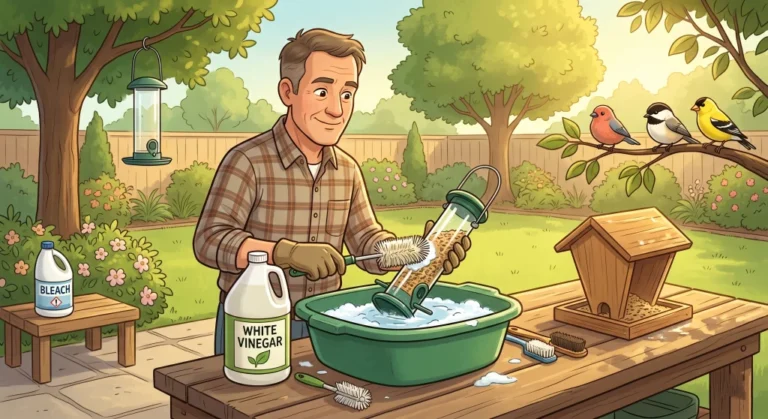
A clogged feeder is usually a moisture, debris, seed-flow, or hardware problem rather than proof that the entire feeder is defective. A clean skewer is handy for a dry mechanical bridge, but I would not use it to put wet seed back into circulation. If rain caused the clog, discard the affected food and clean the feeder. For routine maintenance, use brushes sized to the ports and seams so old residue is removed before it becomes another obstruction.
Prevention comes down to observation and a few mechanical checks. Use seed that flows freely through the feeder you own, keep drainage paths open, limit the amount of food sitting outside during slow or wet periods, and inspect the seed after rain. Those steps will not make a feeder impossible to clog, but they remove the most common repeat causes.

A galvanized metal seed storage bucket with a rustic hammered steel finish, holding up to 25 lbs (16.5 quarts) of bird seed. Features a locking lid to prevent spills and deter critters, an integrated side pocket for the included scoop, and a sturdy handle for easy transport. Measures 14 x 14 x 13 inches.
Check on AmazonIf you click this link and buy, we earn a commission at no additional cost to you.
FAQs
🌧️ Why is my bird feeder not dispensing seed after a rainstorm?
Rainwater can enter through ports, seams, lids, or trays and make seed clump around the dispensing area. If the seed is genuinely wet, do not simply break the plug and continue feeding it. Empty the feeder, discard the wet food, clear the drainage, clean the feeder, let it dry, and refill with fresh seed.
🌻 What should I do if my bird feeder seed is not coming out even when dry?
If the seed is dry, check for bridging at the port, packed seed dust, old hulls, damaged inserts, or a seed-and-port combination that does not flow well. Larger chunks and some irregular seed mixes are more likely to bridge in narrow openings. A feeder with a more open seed path is often the cleaner fix if the same dry jam keeps returning.
🥄 Can I use cooking spray on the inside of the tube to stop clogs?
No. Do not spray cooking oil or other lubricants inside the seed path. They can coat the feeder and food, collect dust, become rancid, and create another residue that has to be cleaned away. Fix the port size, drainage, moisture, or feeder damage instead of adding a lubricant where birds are eating.