How to Get Rid of Ants Around Your Bird Feeder (Not Just at It)

How To Get Rid Of Ants Around Bird Feeder

An ant moat can stop ants from crossing a hanging route to nectar, but it does not solve ants foraging on the ground below a feeding station. Ground activity is usually a food-source problem first: spilled seed, suet crumbs, nectar drips, and other debris give workers a reason to keep returning. I start by removing

Ant Moat for Bird Feeder: How It Works and Which Type Actually Lasts

Ant Moat For Bird Feeder

An ant moat for a bird feeder is a simple water barrier that can stop ants traveling down a hanger from reaching nectar. The most useful moat is not automatically glass, plastic, built-in, or clip-on; it is the one that stays filled, sits in the ants’ path, fits your hardware, and is easy to check.

How to Keep Ants Out of Your Hummingbird Feeder (Without Harming the Birds)

How To Keep Ants Out Of Hummingbird Feeder

The safest way to keep ants out of a hummingbird feeder is to remove the sugar leaks that attract them and put a water-filled ant moat between the feeder and the route ants use to reach it. Plain water is enough. Do not add vegetable oil, petroleum jelly, cooking spray, or other greasy substances, because

Ants in Your Bird Feeder: The $5 Fix That Actually Works

Ants In Bird Feeder

Ants at a hummingbird feeder are usually easiest to stop with a simple physical barrier, not a pesticide or a slippery coating. Place a water-filled ant moat above the feeder so crawling ants have to cross it before reaching the nectar, then keep the moat filled and clean up any leaks or sticky residue that

Bird Seed Catcher for Feeder: Does It Actually Help? (The Honest Answer)

Bird Seed Catcher For Feeder

A bird seed catcher can reduce the hulls and spilled food that reach your lawn, deck, or balcony, but it does not make feeder cleanup disappear. It concentrates that debris in one place. If seed and droppings stay wet in the tray, mold and contamination become the new problem. A catcher is most useful when

How to Stop Bird Seed From Sprouting in Your Feeder

How To Stop Bird Seed From Sprouting

Finding green shoots in or under a feeder usually means viable seed stayed wet long enough to germinate. Cheap mixed seed can make the problem worse when birds toss low-preference grains aside, but sprouting by itself is not proof that a blend is poor quality. The most reliable fixes are keeping seed dry, putting out

Bird Feeder Clogged? Here’s the 2-Minute Fix (and How to Stop It Happening Again)

Bird Feeder Clogged

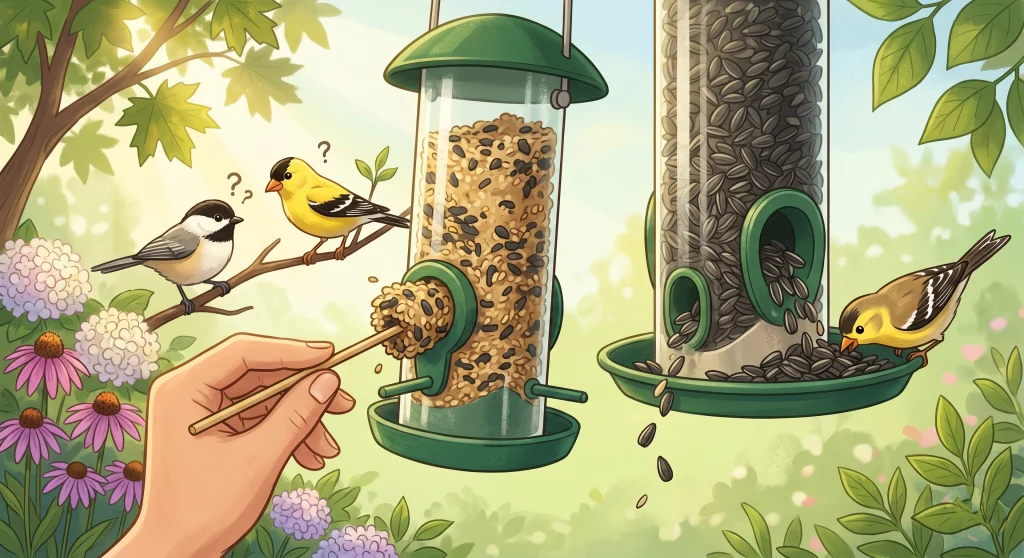
A clogged bird feeder can come from two different problems: dry seed bridging across a port, or seed that has become wet and started clumping. Treat those differently. A clean wooden skewer can free a dry mechanical jam without dismantling the whole feeder, but wet, sour, sprouting, or moldy seed should be discarded rather than

How to Keep Bird Feeder from Getting Wet: The Dome That Changes Everything

How To Keep Bird Feeder From Getting Wet

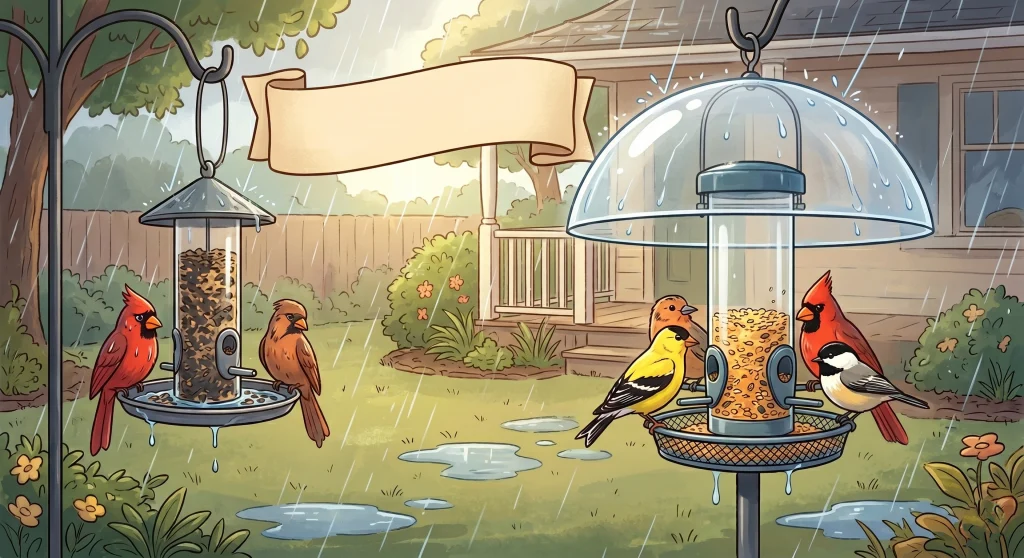
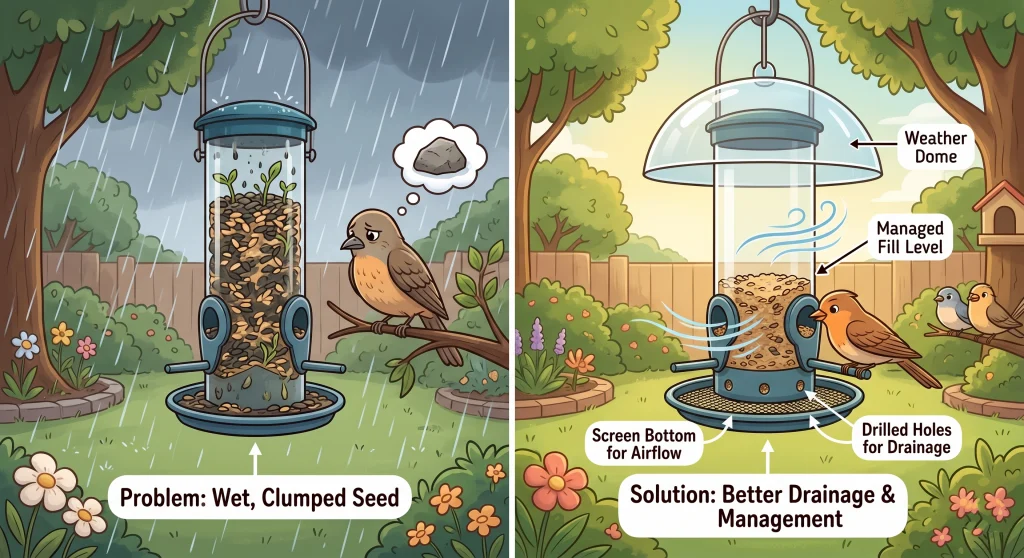
I’ve seen plenty of good seed ruined by a wet stretch of weather, and the fix is rarely one accessory by itself. A rain cover can block direct precipitation, but drainage, feeder exposure, and how much seed you put out at once matter just as much. The practical goal is to keep seed dry, let

Bird Feeder Seed Problems: Why Your Seed Goes Bad So Fast (And What to Fix)

Bird Feeder Seed Problems

Most bird feeder seed problems come down to moisture, slow seed turnover, or a feeder that lets old food sit where air and birds cannot reach it. Good drainage and smaller fills help, especially in warm or wet weather, but once seed itself becomes wet, moldy, sour-smelling, or heavily clumped, I do not try to

How to Clean a Wooden Bird Feeder: The Linseed Oil Mistake

How To Clean Wooden Bird Feeder

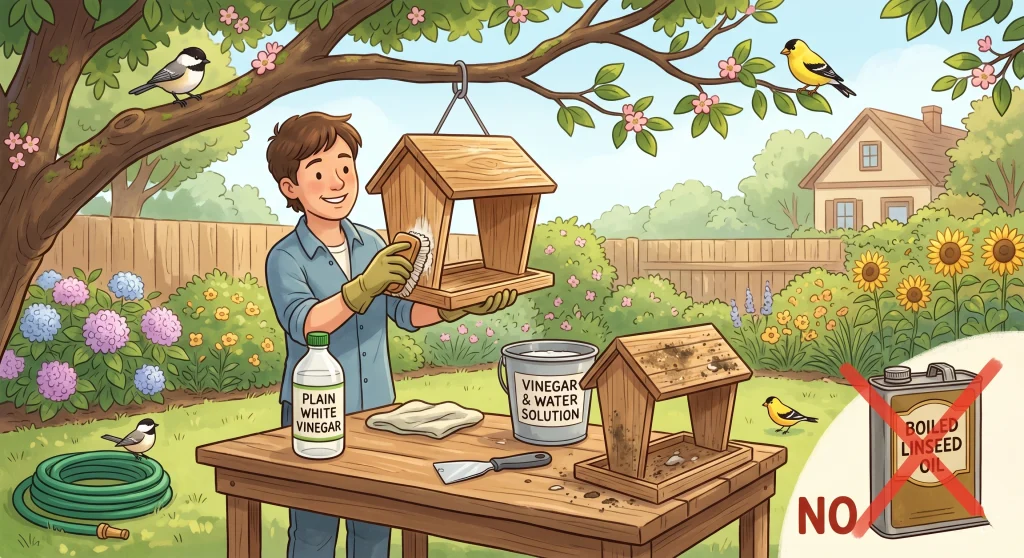
Cleaning a wooden bird feeder takes more care than cleaning a smooth plastic or metal feeder because porous wood holds moisture and can be harder to disinfect. Start by removing old seed and droppings, scrub the wood with hot soapy water and a stiff brush, rinse thoroughly, and let the feeder dry completely before refilling.

How to Clean Bird Poop Off Your Deck (Without Ruining the Wood Finish)

How To Clean Bird Poop Off Deck

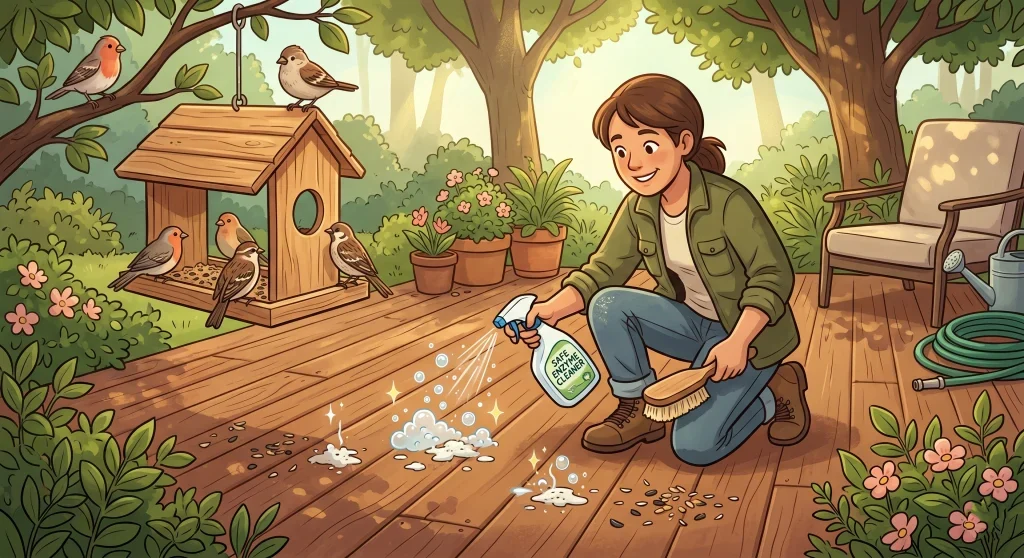
Getting bird droppings off a wooden deck is mostly about softening the residue before you scrub and choosing a cleaner that will not damage the wood finish. Bird droppings contain urates and other organic material, but there is no need to treat the mess as a special acid-neutralization problem. Wet the droppings first, remove them

How to Store Bird Seed: The Container That Keeps It Fresh All Season

How To Store Bird Seed

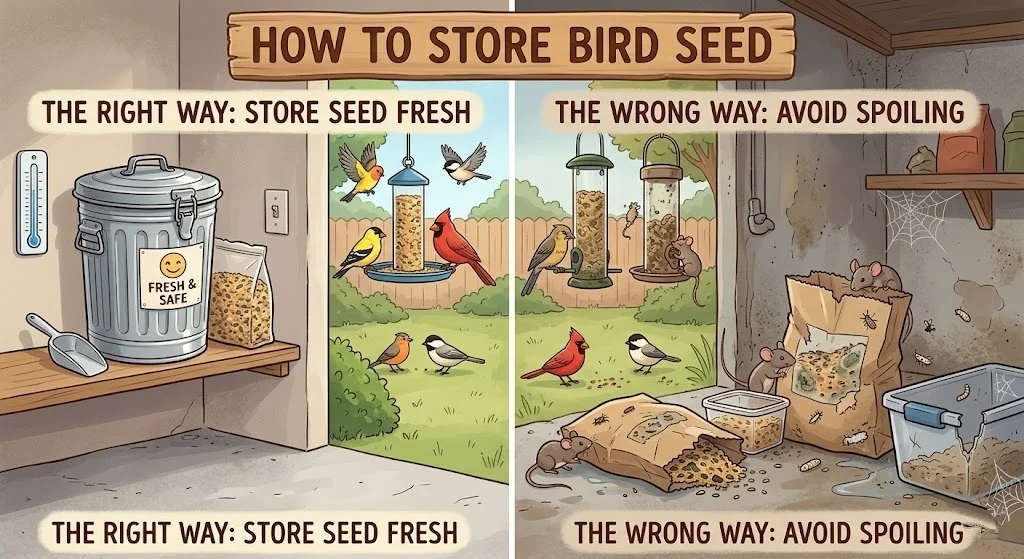
Buying good seed only helps if it stays dry, clean, and protected before it reaches the feeder. For most homes, the best bird seed storage setup is a tightly closed container kept in a cool, dry place where rodents and insects cannot get to it. Metal is the most reliable choice when mice or rats

How to Clean a Bird Feeder With Vinegar (And When Bleach Is Better)

How To Clean Bird Feeder With Vinegar

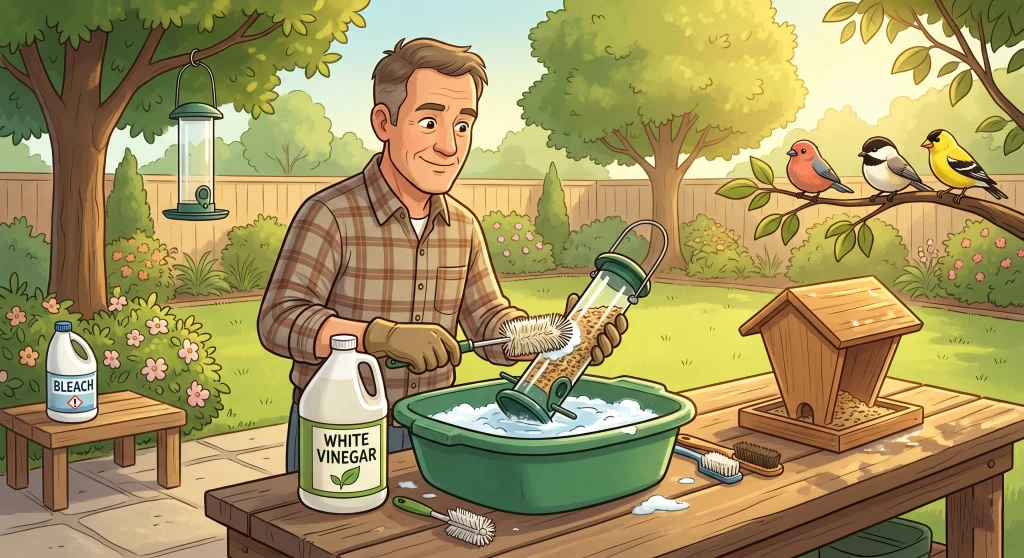
Knowing how to clean a bird feeder with vinegar gives you a useful option for routine washing when you want to loosen grime without reaching immediately for a stronger disinfectant. Vinegar can help with buildup, but I do not treat it as equivalent to bleach for disease control. Cornell recommends a dilute bleach solution for

How to Clean a Hummingbird Feeder: Why It Needs to Happen More Often Than You Think

How To Clean Hummingbird Feeder

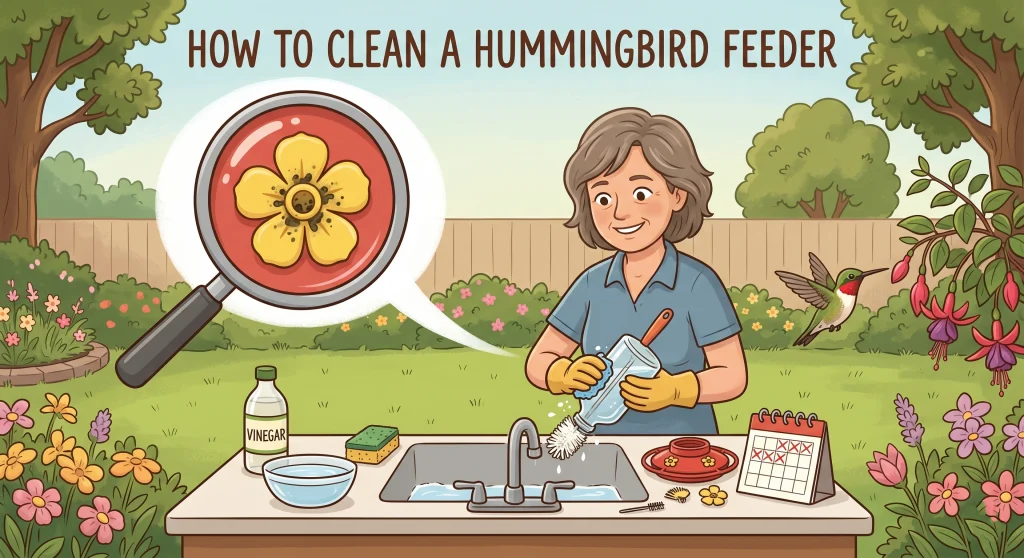
A hummingbird feeder can look clean from a few feet away while residue or mold is building inside ports, seams, bee guards, or the base. Sugar water needs a much shorter replacement and cleaning routine than dry seed, especially in warm weather. I treat every refill as a chance to take the feeder apart and

How Often Should You Clean Your Bird Feeder? (The Answer Depends on the Weather)

How Often To Clean Bird Feeder

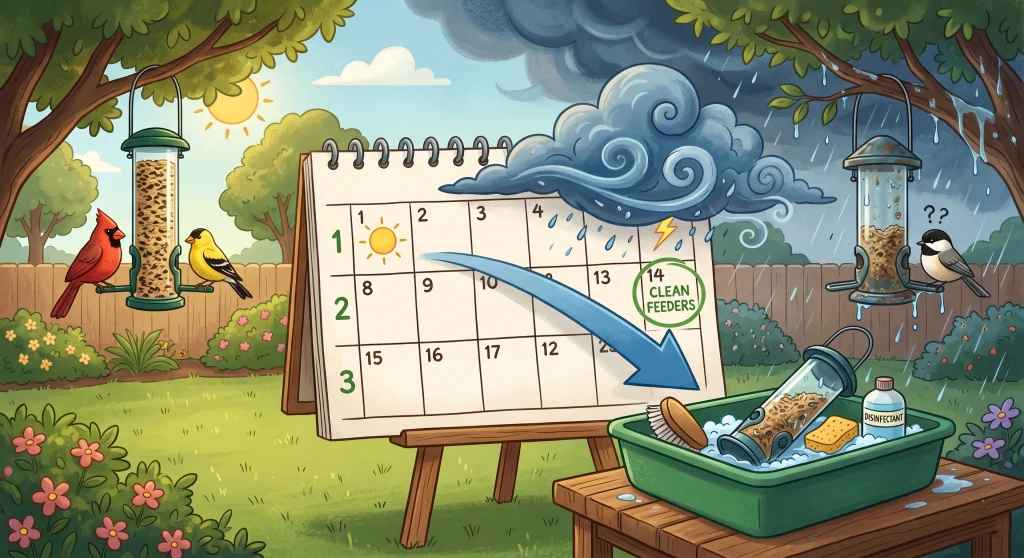
For a typical seed feeder, cleaning about every two weeks is a useful starting point, not a deadline you should wait for when the feeder is already dirty. Wet weather, heavy use, spoiled seed, or a sick bird can all change the schedule. Hummingbird feeders need much more frequent attention because sugar water spoils quickly,

How to Clean a Bird Feeder: Most People Do This Too Rarely (And Birds Notice)

How To Clean A Bird Feeder

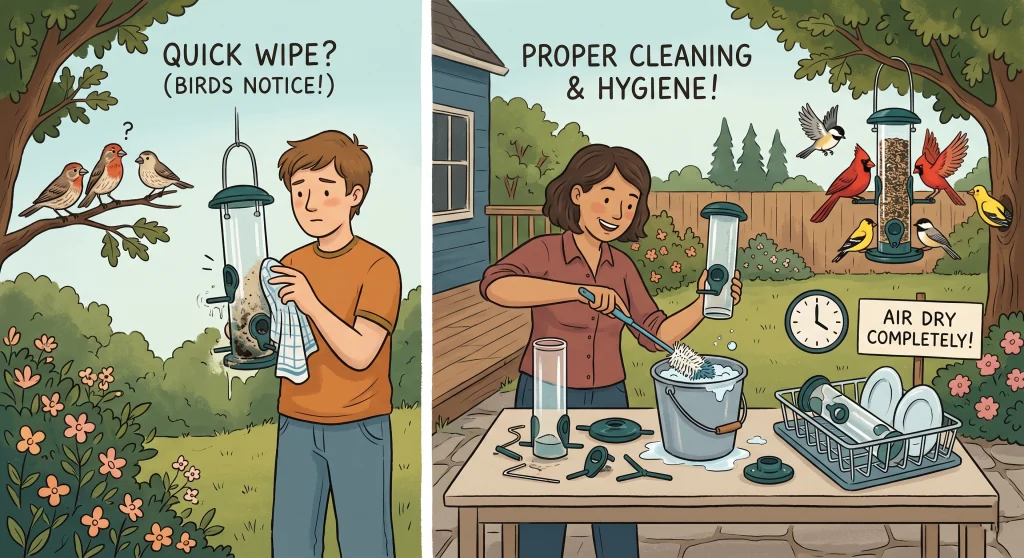
Cleaning a bird feeder is not just about appearance. Old seed, droppings, moisture, and residue can create conditions that help mold grow and diseases spread where birds gather. For seed feeders, a practical baseline is a thorough cleaning about every two weeks, with more frequent cleaning during wet weather, heavy use, or disease concerns. Take