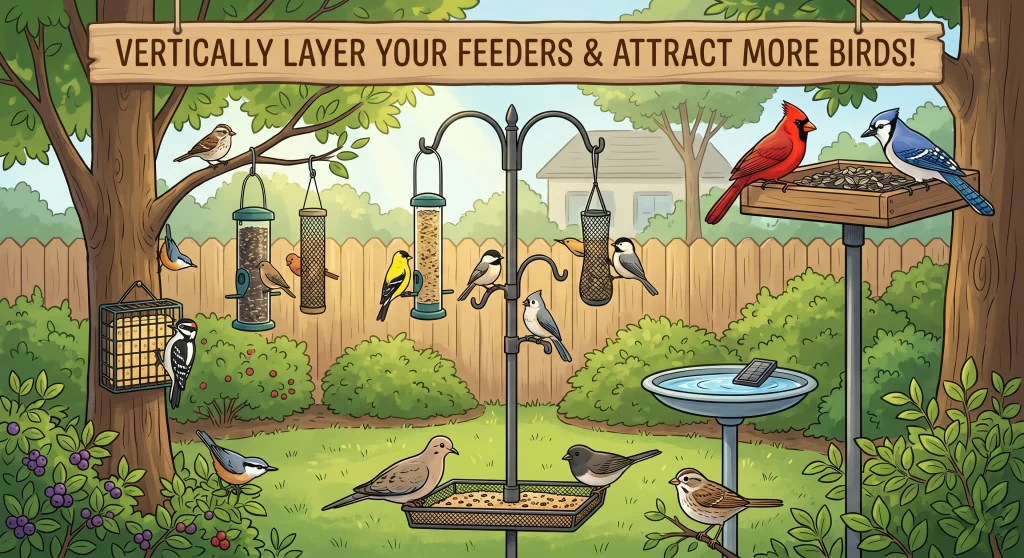
The Problem With Just Adding More Seed
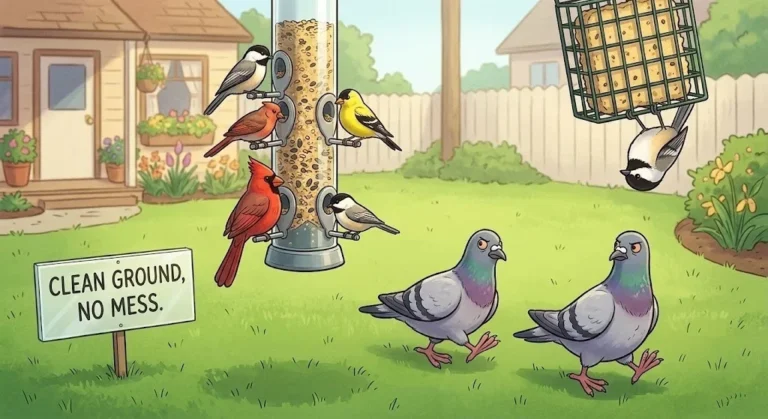
If you find yourself staring out the window wondering how to attract more birds to your feeder, you are not alone. When customers at the store asked me how to increase bird feeder activity, one of the first things I looked at was whether every feeder was asking birds to feed in the same way. Going from a small, repetitive crowd to a broader mix is usually less about pouring out more food and more about creating different ways for local birds to use the yard.
Most people assume that filling a bigger feeder will automatically solve the problem. What often happens instead is that the species already comfortable with that feeder simply get more access to the same food. Different birds forage differently, land differently, and favor different foods and cover. If your yard offers only one feeder design in one spot, some local species may have little reason or ability to use it even though they are nearby.
When you are learning how to attract birds to your yard long-term, this difference in feeding style becomes obvious. Doves and juncos spend a great deal of time feeding low, chickadees and finches readily use hanging feeders, and woodpeckers often respond well to suet or other feeders that let them cling. Those preferences overlap, but the practical lesson is simple: one plastic perch should not be expected to serve every bird in the neighborhood equally well.
Why Species Diversity Requires Height Diversity
Over time, I’ve watched this pattern repeat: someone adds two or three feeders, but all of them are the same style, at roughly the same height, offering nearly the same food. The yard gains capacity without gaining much variety. One practical way to broaden the setup is to vary where and how food is presented instead of simply multiplying the same feeder.
Field Note: One pattern I heard often at the store was someone buying several good seed types, mixing them into one hanging tube feeder, and still seeing only the birds already comfortable on that feeder. The food was not necessarily the problem. The setup was giving ground-oriented birds, larger tray-feeding birds, and clinging birds only one way to eat.
Using more than one feeding height can be a useful part of increasing species diversity, especially when each position also offers a different feeder style. I think of ground, hanging, and stable tray or hopper positions as practical setup zones, not three biological categories. Many birds cross between them, but varying those opportunities can make the station accessible to species that rarely use your current feeder.
More than one feeding point can also give subordinate birds additional openings when a dominant bird occupies one feeder. It will not eliminate competition, and a pushy bird may visit several feeders, but spreading food across different feeder styles and positions can reduce the pressure on a single crowded access point. Think of it as adding more tables rather than expecting one table to serve every bird at once.
The 3-Layer Feeding Station Concept
If you want a greater variety of birds at your feeder, these three zones are a useful way to audit what your current setup is missing. They are not strict rules, and the birds will ignore the labels whenever they feel like it. In practice, the idea is simply to combine a low feeding option, a hanging option, and a stable tray or hopper option when your space and pest pressure allow it.
The Ground Layer (0 to 1 Foot)
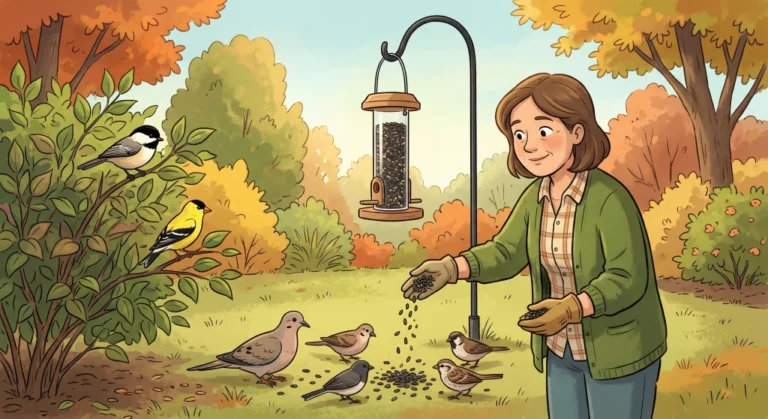
Many familiar backyard birds, including Mourning Doves, Dark-eyed Juncos, towhees, and several native sparrows, often feed on or close to the ground. They may use raised trays in some yards, but a swinging tube feeder is not their natural first choice. If you only offer hanging feeders, you can miss much of that low-feeding activity even when those birds are already in the area.
To make that low feeding option more deliberate, use a shallow tray with drainage rather than dumping a large pile of seed into damp grass. Put out only what birds can use reasonably quickly, remove wet seed and accumulated hulls, and keep the area clean because ground feeding is more accessible to rodents and other mammals. If nighttime visitors become a problem, bringing the tray in or skipping the ground layer altogether is a perfectly reasonable tradeoff.

The Kingsyard Ground Bird Feeder provides a raised feeding platform for cardinals, doves, blue jays, and other birds that prefer feeding close to the ground. Its recycled poly-lumber frame supports a metal mesh base that allows rainwater and debris to drain away from the seed. The feeder holds up to 5 pounds of seed and uses foldable support legs for easy placement, storage, and routine cleaning.
Check on AmazonIf you click this link and buy, we earn a commission at no additional cost to you.
The Mid-Level Layer (3 to 6 Feet)
This is the familiar hanging-feeder zone, often reached with a shepherd’s hook, pole arm, or suitable branch. Chickadees, titmice, many finches, and nuthatches readily use tube and mesh feeders here because the feeder design suits the way they perch or cling. The exact height matters less than safe access, the right feeder for the food, and a location that does not leave birds exposed to obvious hazards.
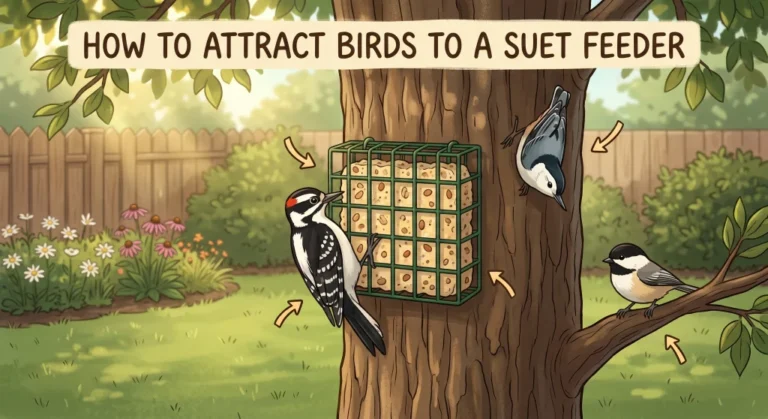
When selecting hardware for this zone, match the feeder to the food and the birds you want to serve. Tube feeders work well with sunflower, while nyjer needs small ports or mesh designed to hold the tiny seed. Suet can add woodpeckers and nuthatches without needing a universal three-to-four-foot mounting rule; I would place it high enough to reduce easy access for ground predators and mammals while keeping the feeder stable and easy to clean.

A weight-activated squirrel-proof bird feeder with a metal, anti-rust powder-coated construction built for year-round outdoor use. When a squirrel climbs on, its weight automatically closes all feeding ports. Holds up to 3 lbs of most seed types, with a wide-mouth opening for spill-free refilling and a transparent body to monitor seed levels. The removable base allows quick, tool-free cleaning. Attracts finches, cardinals, and chickadees.
Check on AmazonIf you click this link and buy, we earn a commission at no additional cost to you.
The High Layer (6 Feet and Above)
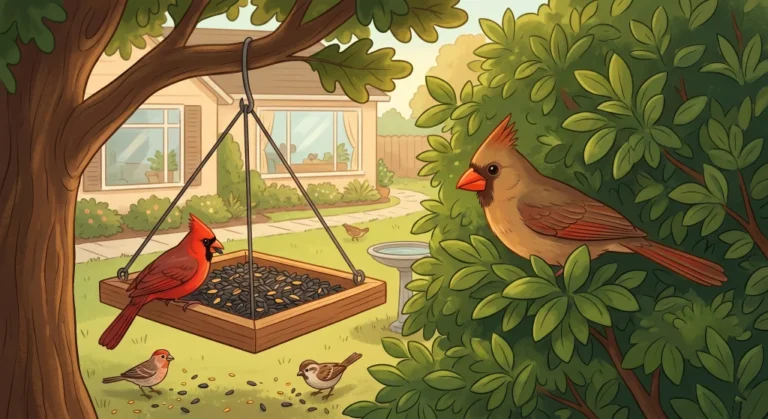
A third useful option is a stable tray or hopper with more landing space than a narrow tube perch. Northern Cardinals, Blue Jays, and grosbeaks often use these designs readily, but the important feature is the broad, stable feeding surface, not a universal requirement that it sit six feet or higher. Cardinals in particular may feed on the ground as well as on trays and hoppers.
A securely mounted platform or roomy hopper can complement the hanging tube and low tray by offering a different kind of landing and feeding surface. That does not reserve the feeder for large birds, and it will not stop dominance behavior by itself. What it does provide is another access point, which can give other birds a chance to feed when one station is crowded.
| Feeding Layer | Preferred Feeder Types | Birds This Setup Often Adds |
|---|---|---|
| Low / ground-oriented | Low tray with drainage | Doves, Juncos, Native Sparrows, Towhees |
| Hanging / mid-height | Tube feeders, nyjer mesh, hanging suet | Finches, Chickadees, Titmice, Nuthatches, some Woodpeckers |
| Stable tray or hopper | Platform feeders, roomy hoppers | Cardinals, Jays, Grosbeaks, plus many smaller species |
Treat this table as a setup framework, not a height chart for bird behavior. Cardinals may feed on the ground, chickadees may use a tray, and many species move freely between positions. The value comes from offering different feeder designs and access points rather than assigning each species to one level.

A large fly-through bird feeder made entirely from recycled poly lumber. The spacious tray design gives multiple birds plenty of room to feed, perch, and socialize. Features a removable plastic seed tray with handle for easy cleaning, and drainage holes to prevent wet seed buildup. Versatile mounting options — hang it with the included hanger or mount it on a pole. Easy to fill and maintain.
Check on AmazonIf you click this link and buy, we earn a commission at no additional cost to you.
Match the Food to the Birds and Feeder
If you have been struggling with how to attract birds to your feeder despite buying expensive food, look at the combination of food, feeder design, and the birds you are trying to reach. Seed does not belong to a particular height. A better rule is to use food the target birds actually eat in a feeder that dispenses it cleanly and comfortably.
Common Mistake: White proso millet is not useless filler. Doves, juncos, towhees, and many native sparrows eat it readily. The mismatch happens when a blend heavy in millet is poured into a hanging tube intended mainly for sunflower-eating or nyjer-eating birds, leaving much of the millet to be discarded while the birds sort for what they want.
Instead of assigning seed to a height, match a few useful foods to feeder designs that make sense for the birds already present in your area:
- For a Low Tray: White proso millet and a modest amount of black oil sunflower can work well for doves, juncos, towhees, and native sparrows. Cracked corn can attract additional birds and mammals, so I use it sparingly, keep it dry, and skip it if rodents or nuisance animals are already a problem.
- For Tube or Finch Feeders: Use black oil sunflower or sunflower hearts in compatible tube feeders, and use nyjer in a feeder specifically designed for the tiny seed. This gives finches, chickadees, titmice, and nuthatches food they can access without forcing one blend to serve every species.
- For Trays and Hoppers: Black oil sunflower remains one of the broadest choices. Safflower can suit cardinals and several other feeder birds and may be less attractive to some nuisance species, while peanuts can add jays, woodpeckers, chickadees, and nuthatches if they are kept dry and fresh.
Matching food to the birds and to the feeder usually cuts down on sorting and waste while giving different species a genuine reason to use different parts of the station. You do not need a separate seed for every height. You need a few well-chosen foods presented in ways the local birds can actually use.
The Anchor: Shrubs and Native Plants
Feeders act as the restaurant, but native plants help build the neighborhood around it. A yard with only open lawn can offer food without offering much shelter, natural forage, or nesting structure. Adding native vegetation broadens the yard beyond the species willing to visit a seed feeder.
Nearby shrubs, trees, and other useful cover can give birds places to pause and retreat, although the best distance depends on your yard and whether cats or other predators can use that cover as an ambush point. Native plants add even more value by supplying insects, seeds, fruit, shelter, and nesting structure. In practice, habitat diversity often brings in birds that no amount of extra feeder hardware would reach on its own.
Water as the Universal Attractor
One more resource can broaden the species mix beyond birds that regularly eat feeder seed: water. A clean, shallow bird bath may draw robins, waxwings, warblers, and other birds that have little interest in sunflower or millet, so it complements the feeder rather than competing with it.
American Robins, Cedar Waxwings, and many migrating warblers are good examples of birds that may visit water even when they ignore a seed feeder. Keep the bath shallow, clean it regularly, and avoid placing it directly under a feeder where hulls and droppings can foul the water. Give nearby birds time to discover it just as you would with a new feeder.
In my experience, a little movement, such as a gentle drip or water agitator, can make a bath easier for birds to notice and more attractive to investigate. I treat movement as an extra cue, not proof that the water is safe. Clean water, shallow depth, and sensible placement still matter more than the gadget creating the ripple.

A solar-powered bird bath wiggler with a built-in 1500mAh battery that keeps the water moving day and night. Continuously agitated water attracts birds, prevents algae buildup, and discourages mosquitoes from laying eggs. No wiring, plumbing, or installation needed — simply place it in any bird bath. Also compatible with heated bird baths for winter use.
Check on AmazonIf you click this link and buy, we earn a commission at no additional cost to you.
Final Thoughts on Expanding Your Setup
Expanding a working feeder setup does not require replacing everything you already have. The useful move is to notice what your current station offers and add one complementary opportunity, such as a low tray, a finch feeder, a stable hopper, native cover, or clean water. That creates variety in the setup without pretending a backyard feeder station is a substitute for natural habitat.
Start with one change rather than buying five new feeders at once. Add the feeder type, food, cover, or water source that fills the clearest gap in your current yard, then watch which birds actually use it before changing anything else. If the next gap is hardware, the overview of bird feeder types can help you compare the basic designs before adding another station.

A premium nyjer (thistle) seed specially loved by finches, including the desirable Goldfinch. With around 150,000 seeds per pound, it delivers exceptional value and countless feeder visits. High in energy and extra clean, it's ideal for use in finch feeders with small holes and tiny perches. Available in a 10-pound bag with a convenient velcro press-lok closure.
Check on AmazonIf you click this link and buy, we earn a commission at no additional cost to you.
FAQs
🐦 Why are only house sparrows coming to my new layered setup?
House Sparrows are adaptable feeder birds, and millet can be especially attractive to them. If they are dominating, reducing millet may help, while a nyjer feeder can create a more finch-focused option. Safflower is less attractive to House Sparrows in some yards, but it is not a guaranteed deterrent, so feeder design and the other foods you offer still matter.
🌳 Do I need a giant yard to support multiple feeder heights?
Not at all. A small yard can still support more than one feeding style, but you do not need to force every feeder into a three-foot circle. Use the space you have to keep food dry, make cleaning easy, reduce crowding, and avoid placing a low tray where it will simply collect hulls and droppings from feeders above.
🦅 Will adding more feeders and attracting more birds bring in hawks?
It can happen because hawks may investigate places where smaller birds gather. Seeing a hawk pass through once does not mean the station has failed, but if one is repeatedly hunting around the feeders, temporarily taking the feeders down can disperse the concentration of prey. Put them back after the area has had a break and watch whether the hunting pattern resumes.
❄️ Does the height layering strategy work in the winter?
Yes. A low tray can be especially useful for juncos and native sparrows in winter, particularly when snow makes their usual feeding spots harder to use. Keep the seed dry, clear snow when needed, and expect activity to depend on which wintering species are actually present in your area.
🐿️ How do I keep squirrels out of the ground feeding layer?
A ground tray is difficult to squirrel-proof because it is intentionally accessible from the ground. If squirrels or rodents become a major problem, skip that layer and keep the rest of the strategy: use baffled pole-mounted or hanging feeders, manage spilled seed, and offer different feeder designs above ground instead.