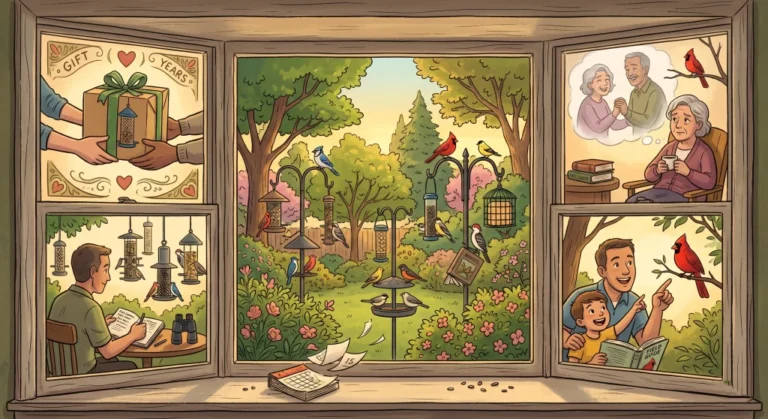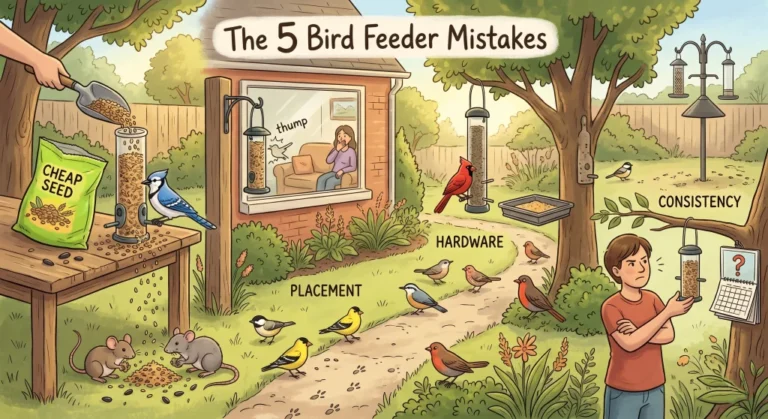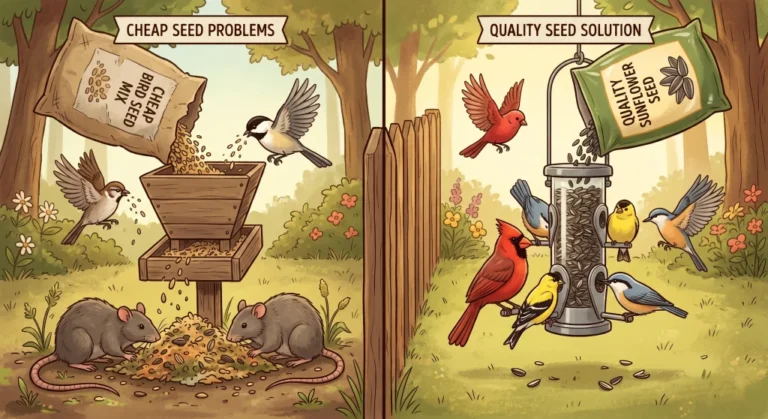
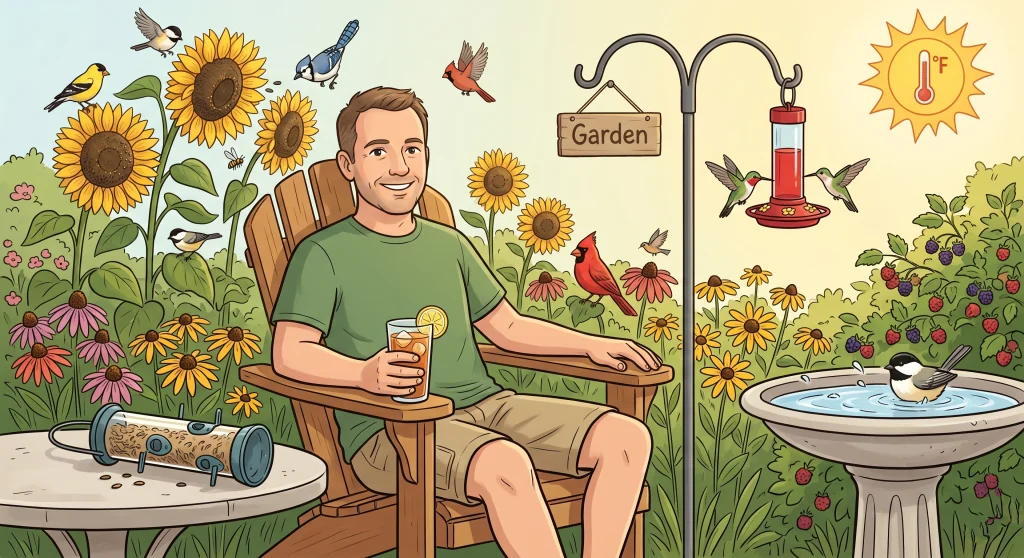
For three summers, I barely touched my bird feeders. My regulars did not disappear. Here is what I actually learned about stepping back during the hottest months, why the endless summer maintenance might not be necessary, and how my backyard routine improved when I finally took a break.
Why I Rethought the Summer Grind
Whenever someone asks whether they should feed birds in summer, my answer is usually based on what I ended up doing in my own backyard. I did not completely quit, but I stopped trying to force a heavy winter feeding routine into the middle of July.
When I managed the bird feeding store, we never explicitly told customers to stop feeding in the summer. From a retail perspective, more active bird feeders in summer means more seed sales year-round. It is a business, and keeping feeders full is perfectly fine if you are willing to do the heavy upkeep. At my own house, I made a different call. I noticed seasonal patterns that made me rethink the summer grind.
Field Note: People often came into the store in July frustrated because their seed was clumping or turning into a solid block. I would ask where the feeder was located and how long the seed had been sitting. Most of the time, the seed had been baking in 90-degree heat for two weeks while the birds were off eating insects.
Reason 1: The Heat Ruins Everything Fast
One of the primary reasons to take feeders down for summer, or at least significantly reduce the volume you put out, is rapid spoilage. Seed spoils incredibly fast in summer heat. Black oil sunflower seeds can go rancid within days when temperatures hit 90 degrees Fahrenheit. If you have ever smelled bad seed, it has a sharp, sour odor that tells you instantly why the birds are avoiding it.
Rain is the other major problem. A quick summer thunderstorm followed by intense humidity creates the perfect environment for mold. Wet seed clogs tube feeders within 48 hours of rain. Once mold takes hold, you have to dump the entire batch and scrub the feeder completely. The Cornell Lab of Ornithology confirms that seed spoils much faster in summer heat, which means you are often throwing away money if you fill your feeders to the top.
Pro Tip: If you are going to keep feeding through the heat, move your feeder into the shade. Seed baking in direct July sunlight will spoil twice as fast as seed hung under a dense tree canopy.
Reason 2: Natural Food is Everywhere
During the winter, your feeder might be a crucial calorie source. From June to August, natural food is abundant. Insects, caterpillars, berries, and native seeds are everywhere. Many birds shift their diets heavily toward insects during the nesting season because their nestlings require high protein to grow.
I noticed my own feeders were seeing maybe 20 percent of their normal winter traffic. I was refilling feeders every three to four days to prevent spoilage, but only a handful of birds were actually visiting. It felt wasteful. The birds did not need me. They were simply taking advantage of an easy snack while primarily foraging elsewhere.
| Season | Primary Natural Diet | Feeder Reliance | Maintenance Level |
|---|---|---|---|
| Winter | Scarce (dried seeds, hidden insects) | High | Low (Seed stays dry and fresh longer) |
| Summer | Abundant (insects, fresh berries, fruit) | Low | High (Mold, heat, frequent cleaning needed) |
Reason 3: The Suet Melts
If you feed suet, summer requires a major adjustment. Suet is essentially fat. Above 80 degrees, standard suet cakes melt, drip, and turn rancid quickly. The dripping fat can coat a bird’s feathers, which damages their ability to insulate and fly properly.
While you can buy no-melt suet dough, I found it easier to just pull my suet feeders completely from June through August. It eliminated a messy chore and stopped attracting raccoons or other pests looking for a high-fat summer meal. You can read more about safe suet practices in our guide on how to offer suet.
Reason 4: The Changing Conversation on Bird Health
There is also an ongoing conversation about feeder hygiene that influenced my routine, rather than a sudden panic. In April 2025, the RSPB in the UK changed their advice, asking people to pause putting out seeds and peanuts from May to October due to the risk of trichomonosis spreading at feeding stations. When birds congregate in warm weather, diseases transmit much faster.
Warning: The RSPB guidance is specific to the UK. US guidelines have not changed to mandate a summer pause. However, the underlying science remains true regardless of location. Warm weather accelerates the spread of bacteria and disease at crowded feeders.
While I live in the US, paying attention to how fast disease spreads in warm weather made me hyper-aware of feeder hygiene. Reducing the number of active feeding stations simply lowers the risk in my yard. But reducing does not mean abandoning the birds completely.
What I Kept Doing (And What Actually Happened)
I did not pack up everything. My yard was still a reliable stop for local wildlife, just not an all-you-can-eat seed buffet. Here is what I kept active.
- Hummingbird feeders: Nectar spoils extremely fast, so I changed it every three days without fail. Check out our hummingbird feeder guide for the best summer nectar ratios.
- Fresh water: A clean birdbath is the single best way to attract birds in the summer. They need water for drinking and bathing to keep their feathers in top condition.
- A single seed tray: I kept one small tray with a handful of sunflower seeds, cleaned daily. The main reason for this was the fledglings. During June and July, young birds like goldfinches and house finches are just leaving the nest and learning how to eat. A simple tray gives these clumsy juveniles an easy place to figure out how to crack open a seed while their parents forage nearby.
What happened when September rolled around? The birds came back immediately. There was no evidence they abandoned the area during my summer reduction. They simply spent their summer in the trees and bushes, and then added my feeder back to their daily route once the temperatures dropped.
According to the Purdue Extension in May 2025, feeding birds in summer is largely a personal preference. They confirmed that bird migration is not affected by feeders. If you stop your summer feeding routine, they will move on to natural sources just fine. They are wild animals, not dependents.
Final Thoughts: Finding Your Summer Routine
Some of the best summer bird feeding tips are about doing less, not more. If you enjoy watching birds from your patio in July and do not mind the extra cleaning, keep your feeders up. Just be smart about it.
Fill them halfway. Clean them twice as often. Take down the suet. If you decide you want a break, take the feeders down without guilt. Wash them out, store them in the garage, and enjoy the break. The birds will be perfectly fine, and they will be waiting for you when the crisp fall weather returns. If you are curious about the psychology behind why we feel so obligated to keep filling them, you might relate to what selling bird feeders taught me about people.
Whenever you decide to put them back up, make sure you start with a fresh slate. Review our steps on cleaning a bird feeder to ensure it is safe for the returning flocks.
FAQs
☀️ When to stop filling bird feeders in the summer?
You can stop filling them whenever the maintenance becomes too much, typically around June when temperatures rise. Birds have plenty of natural food like insects and berries available during these months.
🦅 Will birds starve if I take my feeders down?
No. Birds rely on feeders for only a small percentage of their daily diet. When you remove a feeder, they will simply forage for natural foods in the surrounding environment.
🧽 How often should I clean my feeders in hot weather?
In hot and humid weather, clean your seed feeders at least once a week. Hummingbird feeders need to be emptied, cleaned, and refilled every two to three days to prevent dangerous mold.
💧 Should I leave water out in summer if I take feeders down?
Absolutely. Fresh water is the single most important thing you can offer in the summer. A clean birdbath will attract more birds during a heatwave than any type of seed.
🐦 Do bird feeders in summer disrupt migration?
No. Migration is triggered by daylight hours and weather patterns, not the availability of backyard seed. Leaving a feeder up will not convince a migratory bird to stay behind.
Sources and References
- The Cornell Lab of Ornithology notes on seed spoilage and year-round feeding safety. All About Birds.
- RSPB (UK) April 2025 updated guidance on summer feeding and trichomonosis risk. RSPB Official Guidance.
- Purdue University Extension (May 2025) confirming summer feeding is a personal preference and does not hinder migration. Purdue FNR Extension.