People often ask why their inexpensive bird food just ends up rotting on the grass. From what I have seen at the store, the answer always comes down to the ingredient list. Most discount bags are packed with heavy filler grains that wild birds simply refuse to eat. When you buy cheap bird seed, you are usually just paying to feed local rodents and grow weeds under your feeder. I want to explain what is actually inside those bags and why spending a few extra dollars upfront saves you money and time in the long run.
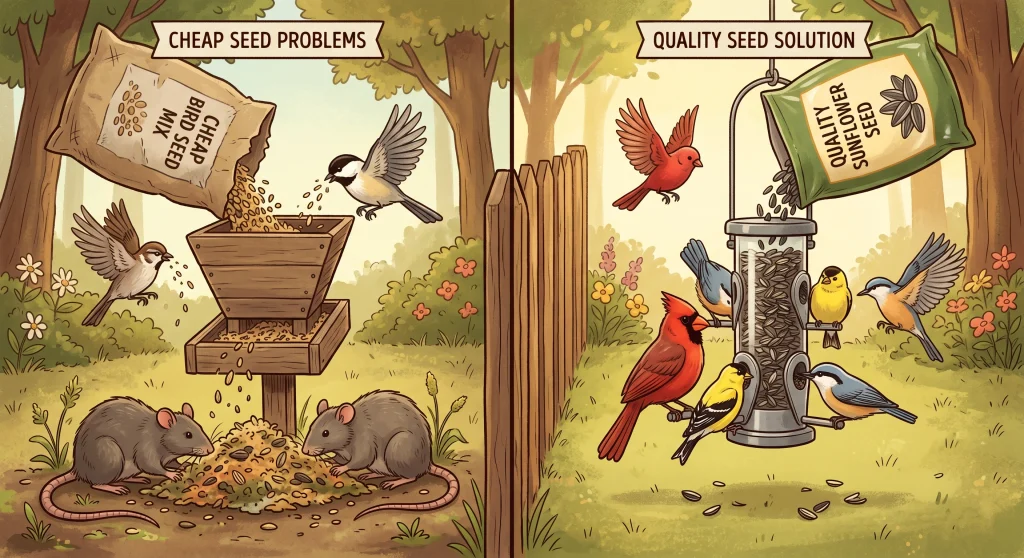
The Daily Conversation About Cheap Bird Seed
There was a conversation I had at least three times a week at the store. A customer would walk in, hold up a mostly empty bag of discount seed, and say: “I spent $8 on this and the birds ignored it.”
The polite version of my answer was that their mix contained certain grains that most local songbirds do not prefer. The completely honest version was that they had just paid eight dollars to feed squirrels and sprout weeds in their lawn. People thought they were saving money, but they were really just buying a future yard maintenance problem.
What Actually Happens When Birds Sort Through the Mix
Watching a bird at a feeder full of the worst bird seed tells you everything you need to know about how they eat. Birds are incredibly efficient foragers. When a chickadee or a cardinal lands on your hopper, they know exactly which items give them the most energy. If they encounter bird seed filler like milo, wheat, or oats, they do not settle for it. They simply use their beaks to toss it right over the edge until they find the one sunflower seed hidden in the pile.
Field Note: I rarely had to visit a customer’s yard to know what was going wrong. They would just stand at the counter and describe a sour smell on their patio, or show me a picture on their phone of a thick, wet layer of discarded milo rotting in their grass. It cements itself together after a rainstorm and turns into a moldy paste.
That wet layer underneath is more than a cosmetic problem. As discarded filler seed decays on the ground, it grows fungus that ornithologists have linked to fatal respiratory infections in birds, like aspergillosis. So that discount bag is not just wasting your money; it is actively creating an unhealthy environment.
Research from the Cornell Lab of Ornithology backs this up completely. Their studies confirm that the vast majority of songbirds will ignore milo entirely. It is a large, reddish-brown grain that offers very little nutritional value for the species most people want to attract. When you fill a tube with it, you are basically asking the birds to do the sorting work for you.
Why Bad Ingredients End Up in the Bag
You might wonder why companies continue to produce bad bird seed mixes if the birds refuse to eat them. The answer is simple economics. Grains like red millet, milo, and cracked wheat are incredibly cheap to harvest and package in bulk. They add heavy weight to the bag, allowing brands to hit a low price point while still offering a product that feels substantial in your hands.
There is also a visual trick at play. When humans look at a clear bag of mixed seed, a variety of colors and textures looks appealing. The red milo, the golden wheat, and the black sunflower seeds look like a gourmet trail mix. Most buyers do not read the ingredient labels. They look at the weight, the pretty picture of a cardinal on the front, and the price tag. The manufacturer gets to sell a heavy bag, and the buyer thinks they got a fantastic deal. It is only a week later, when the tray is clogged with sprouted grains, that the true cost becomes obvious.
- Ignore the front picture: The photos of cardinals and goldfinches are marketing. Flip the bag over.
- Check the first three ingredients: Ingredients are listed by weight. If milo, wheat, or oats are in the top three, put the bag back on the shelf.
- Look for high-yield starters: The best blends will list black oil sunflower, safflower, or peanuts as the primary ingredients.
What We Recommended Instead
Our policy at the store was straightforward. We did not stock seed blends that contained red millet, milo, or wheat. My job was to show people the ingredient panels so they could see exactly what they were paying for. Once you learn to spot the useless fillers, you never go back to the discount aisle.
If you are tired of sweeping up discarded grain and want to know exactly what to put in your feeder, I have broken down all the best bird seed options in detail based on what actually works. But if you just need a quick rule of thumb right now, stick to these three single-ingredient choices.
- Black oil sunflower: This is the universal crowd-pleaser. The shells are thin, the meat is highly nutritious, and almost every songbird will gladly eat it. You can learn more about how to serve it properly in my sunflower bird seed guide.
- Safflower: This is a hard-shelled white seed that cardinals absolutely love. The best part is that squirrels and grackles typically leave it alone because it tastes bitter to them. Check out my safflower bird seed tips if you are dealing with aggressive pests.
- Nyjer: These tiny black seeds are perfect for attracting finches. They do not sprout in your lawn, and the birds consume them entirely. I cover the best feeder styles for this tiny grain in my nyjer bird seed breakdown.
Final Thoughts: Always Read the Label
The next time you find yourself standing in front of a massive display of bird food, take five seconds to turn the bag around. If the first few ingredients include milo, wheat, or oats, put it right back on the shelf. Spending a little more on a bag of pure sunflower or a high-quality blend will completely transform your backyard feeding experience.
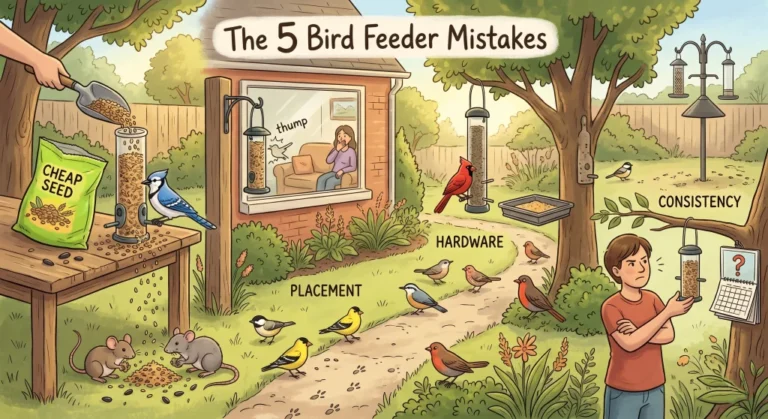
You will see more colorful birds, deal with far less cleanup, and stop accidentally feeding the local rodent population. Once you make the switch, you will immediately notice the difference in activity at your feeder. If you are still running into trouble after upgrading your seed, you might want to review some of the most common bird feeder mistakes I noticed over the years to make sure your placement is right.
FAQs
🌾 Why are the birds throwing seed out of my feeder?
They are likely sorting through filler ingredients to find the good stuff. Birds will toss milo, wheat, and oats to the ground to reach the nutritious sunflower seeds hidden inside cheap mixes.
🐿️ Does cheap bird seed attract squirrels and rats?
Yes, it frequently does. The discarded filler seeds pile up on the ground beneath your feeder. This wet, decaying pile is a massive draw for rodents, raccoons, and other backyard pests.
🌱 Will the dropped seeds grow weeds in my lawn?
Seeds like milo and red millet will absolutely sprout if left on the ground, creating a tough, grassy mess. Upgrading to a no-mess blend or pure black oil sunflower will completely eliminate this lawn problem.
🐦 What is the best all-around seed for backyard birds?
Black oil sunflower is the most universally loved option. It provides high energy and attracts the widest variety of colorful songbirds with very little waste.
Sources & References
While the observations above come from years of direct retail and backyard experience, the underlying facts are supported by ornithological research:
- Seed preferences and bird sorting behavior confirmed via the Cornell Lab of Ornithology.
- Additional insights on avoiding seed fillers sourced from Dan’s Bird Bites.