More Americans feed backyard birds than play golf. You just never hear about it. Millions of people buy seed every single week, yet it rarely comes up in casual conversation at the office. This pastime lacks the flashy gear of other outdoor hobbies or the loud stadiums of professional sports, but the data proves it is one of the most popular activities in the entire country.
The Invisible Crowds
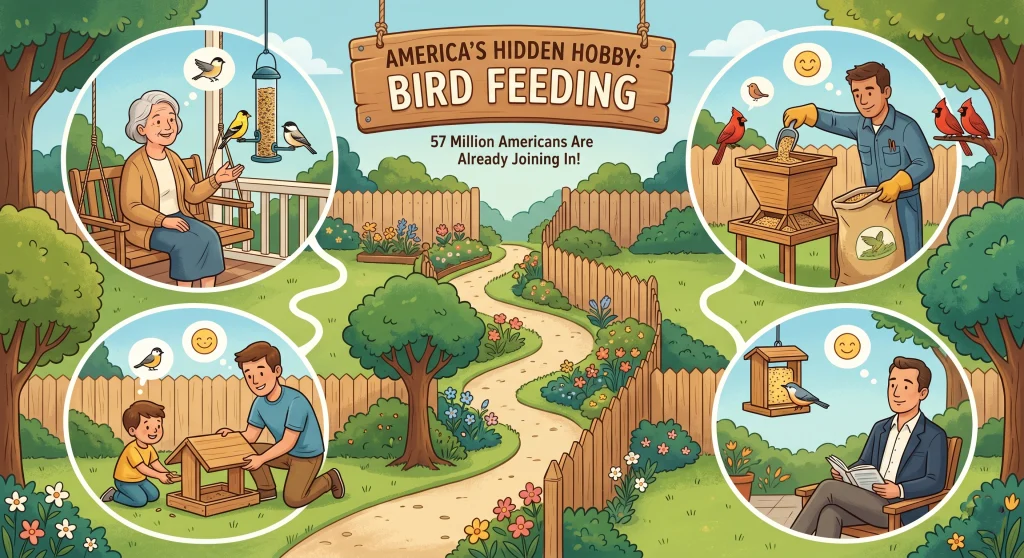
When people ask about bird feeding popularity, they often picture a handful of retired neighbors with a single wooden hopper. During my retail career at a wild bird store, I learned very quickly that this stereotype is completely wrong. I saw construction workers, software engineers, and exhausted parents walking through the doors every single day. The customer base was incredibly diverse, yet they all shared the exact same daily routine.
I remember Saturday mornings when the shop would be standing room only. You would have a corporate lawyer waiting in line behind a mechanic, both of them holding twenty-pound bags of sunflower seed and debating the best way to keep starlings off a suet feeder. In that space, all the usual social barriers evaporated. They weren’t there to network or impress anyone. They were just there because they cared about the creatures in their yards.
It is easy to assume this is a niche interest because it happens entirely in private. Nobody posts their backyard chickadee sightings on social media with the same competitive pride as a marathon medal. Yet, if you look at the actual bird feeding statistics, you realize this community is hiding in plain sight. It is a massive, decentralized group that exists behind millions of fences across the suburbs and rural countryside.
The Staggering Numbers Behind the Seed
The actual scale of this hobby often catches people completely off guard. According to a joint survey conducted by the Cornell Lab of Ornithology and the USFWS in 2022, over 96 million people observed, fed, or photographed birds. That is more than thirty-five percent of the entire United States population participating in some form of birding. It is not just a fringe activity for a few enthusiasts.
Focusing strictly on backyard feeders, the numbers remain incredibly high. Research from the USFWS and Virginia Tech confirms that 57 million Americans spend over four billion dollars annually on bird food alone. For millions of households, keeping the feeders filled is as essential as any other weekly chore. It is a financial and emotional investment in the local ecosystem that happens one scoop of seed at a time, often watched from the quiet comfort of a kitchen window.
Who Actually Feeds the Birds?
At the store, I saw customers ranging from eight years old to ninety. However, the core demographic is remarkably consistent across the country. According to Great Backyard Bird Count data shared by The Garden Diaries, the average person who sets up a feeder has been doing it for eighteen years. It is rarely a passing fad. Once people start, they tend to stick with the routine for a very long time.
That same data notes that roughly two-thirds of active participants are women, and nearly sixty percent fall between the ages of 45 and 64. These wild bird feeding facts perfectly mirrored my daily register receipts. The customers who kept the store running were usually established homeowners looking for a reliable, calming daily activity. This long-term commitment creates a massive cultural footprint that often goes unnoticed by the mainstream media.
Field Note: Our busiest times of the year at the store had absolutely nothing to do with human holidays. The shop would get packed in March as people prepared for spring migration, and it would flood again in November when customers rushed in to help their local flocks prepare for winter.
The Economics of the Backyard
You do not generate billions of dollars in revenue without a highly dedicated customer base. The bird feeder hardware market itself hit 1.2 billion dollars in 2024, and data from DataHorizzon Research shows it growing at a steady 5.5 percent every year. This steady growth proves that people view this as a core part of their home environment. They are not buying cheap, disposable plastic. They are investing in “forever” feeders made of recycled plastic and heavy-duty metals.
I started hearing a specific sentiment more often from customers in the last few years. People felt like they were doing something meaningful, not just filling a tray. As urban development continues to reduce natural habitats, these backyard stations are becoming vital resources for local wildlife. Customers would tell me they felt a sense of stewardship, knowing that their specific yard provided a safe haven in an increasingly paved world.
When you compare these backyard birding statistics to the things we actually discuss in public, the contrast is sharp. Active NFL viewers hover around 150 million, while active golf participants sit near 30 million. Bird feeding sits squarely between them, yet it has zero national television coverage and no dedicated sports bars. It just exists in millions of yards across the country without any need for public validation.
| Activity | Estimated US Participation | Cultural Visibility |
|---|---|---|
| Watching NFL Games | ~150 Million | Extremely High |
| Backyard Bird Feeding | 57 Million | Very Low |
| Playing Golf | ~30 Million | High |
The 2020 Surge I Saw Firsthand
If the hobby was already vast, the events of 2020 pushed it into overdrive. During the lockdowns, our store experienced a wave of new customers unlike anything I had seen before. For the first time in my retail career, we struggled to keep basic hopper feeders on the shelves. People who had never paid attention to a cardinal in their life were suddenly desperate to bring wildlife to their windows as a way to decompress.
The anecdotal evidence at my register was undeniable. Families were looking for a screen-free activity that felt productive and hopeful. Many of those who started during the lockdown realized that the mental health benefits of watching a birdbath or a feeder were far more valuable than they expected. A surprising majority of those new participants have kept their feeders filled even as their normal, busy lives returned.
I remember talking to one young professional who had spent thousands of hours in a high-rise office and was now working from a small desk in his spare room. He told me that watching a pair of nuthatches became the only thing that kept him grounded during those long afternoons. That personal connection to a living thing is what transforms a casual purchase into a lifelong habit. It provides a sense of continuity when the rest of the world feels chaotic.
Why Nobody Talks About It
I often reflected on what selling bird feeders taught me about people, and the biggest takeaway was the sheer privacy of the act. A customer would spend an hour in my store passionately discussing the specific woodpeckers in their yard. Then, they would put on their suit, go back to their corporate office, and never mention the topic to their coworkers.
Nobody talked about it at work, but it felt like everybody did it at home. The hobby has no gear culture, no social performance, and no direct competition. Unlike photography or car restoration, there is very little “gatekeeping” in bird feeding. You don’t need a specific license or a high level of expertise to be “good” at it. You just need to show up and be consistent with your offerings.
In a world that demands we share every detail of our lives, keeping an unassuming hobby in the backyard is incredibly appealing. It is a secret handshake shared by millions of Americans. When you see a high-quality bird pole in a neighbor’s yard, you instantly know something about their character. You know they value patience, observation, and the simple pleasure of watching the seasons change from their own kitchen window.
Final Thoughts: Joining the Crowd
The birds are already there. They are just waiting for a reason to stay.
When you set up a feeder, you are joining a community of 57 million people who have already discovered what makes this routine so rewarding. To join them successfully, you need to avoid the common pitfalls that drive many beginners to quit in frustration. Most of those early problems come down to the quality of what you put in the tray. Starting with the best bird seed is the single most important decision you can make for your local birds. If you are ready to see who is already living in your yard, learning how to attract birds will get you started correctly.
FAQs
💰 How much do Americans spend on bird feeding?
Americans spend over four billion dollars annually just on bird food. When you factor in hardware like feeders, poles, and baffles, the total economic impact is staggering for such an unassuming hobby.
⏳ How long do most people stay in the bird feeding hobby?
Research indicates that the average person who sets up a backyard feeder has been participating for eighteen years. It is an activity with extremely high long-term retention because it requires very little daily maintenance.
🍂 Is bird feeding more popular in specific seasons?
While people feed year-round, interest often peaks when birds are most visible or in need. In mid-winter, natural food sources are frozen or exhausted, making feeders a critical lifeline. Spring also brings a surge as enthusiasts wait for migratory species to return to their region.
⛳ How does bird feeding compare to other outdoor hobbies?
With 57 million active participants, backyard bird feeding actually has a higher participation rate than golf. It remains culturally invisible simply because it is a private, non-competitive activity done at home.
Data Sources and References
To ensure accuracy, the demographic numbers and participation trends mentioned above are drawn directly from the following published research and institutional surveys:
- Cornell Lab of Ornithology & USFWS (2022 Survey): Data tracking the 96 million people participating in broader bird observation activities across the country.
- The Garden Diaries: Great Backyard Bird Count (GBBC) 2024 data detailing the specific demographics of backyard bird feeders, including average age, gender breakdown, and hobby retention rates.
- DataHorizzon Research (2024): Market analysis covering the 1.2 billion dollar bird feeder hardware market and its projected annual growth.