If you spend enough time behind the counter of a wild bird store, you start to notice a pattern. People rarely start feeding backyard birds because they have a deep, preexisting love for ornithology. They usually start because something in their own life shifted, and they suddenly needed a reason to look out the window.
The Real Reason People Walked Into the Store
I sold thousands of feeders over my retail career, but the most important thing I learned had absolutely nothing to do with birds. The bird feeding hobby is rarely just about wildlife. I quickly realized that most customers weren’t actually buying a plastic tube feeder or a bag of black oil sunflower seed. They were buying a reason to stop and look at something.
The daily interactions shaped my entire bird feeder store experience far more than any product training ever did. People came in looking for solutions to common backyard problems, but they often left with something much deeper. Almost nobody starts putting seed out on purpose. It usually begins with a specific trigger.
The Gift Buyer Who Got Caught
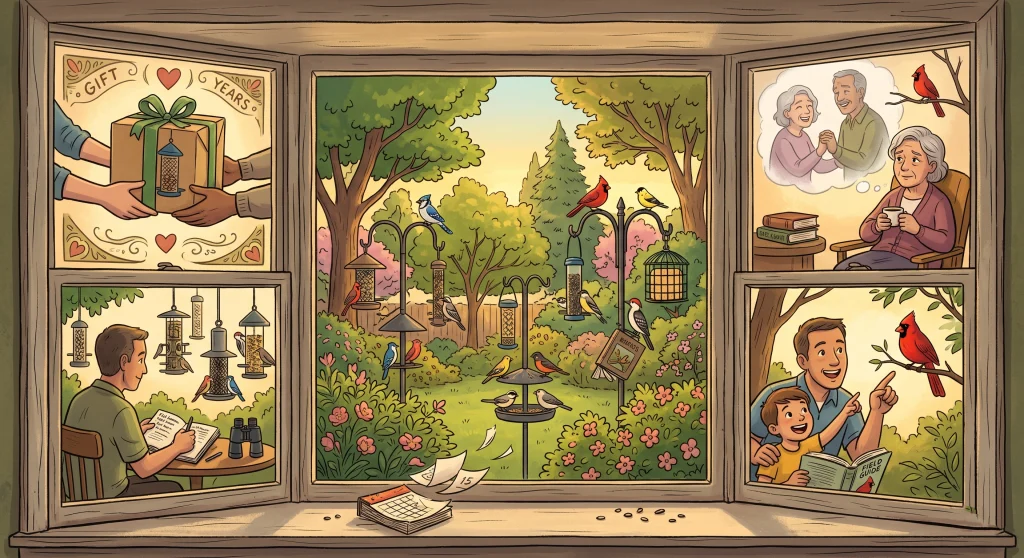
I saw a very specific pattern repeat every single November and December. A customer would rush in looking for a holiday gift for a retired parent or grandparent. They had absolutely no interest in birds themselves. They just needed something easy to wrap that did not look cheap. I would help them pick out a sturdy wooden hopper feeder and some seed, and they would leave relieved.
Then, roughly three months later, that exact same person would walk back through the doors. They weren’t shopping for their parents anymore. They had set the gift up in their own yard “just to test it out,” or they had spent a weekend visiting their parents and sat for an hour staring out the kitchen window. Before they knew what happened, they were back asking me how to attract woodpeckers. It is a quiet routine that sneaks up on you when you aren’t paying attention.
The Widow Who Didn’t Need Advice
I remember one woman who came in every single Tuesday for six months shortly after her husband passed away. She never asked for advice on how to keep grackles away or what time of year to switch to suet. She just bought a small bag of safflower and stayed to talk near the register. Feeding the cardinals in her backyard was the last quiet thing she and her husband did together.
She would tell me about the specific branch where the male cardinal always landed before dropping down to eat. She knew his exact routine, down to the minute he would arrive each evening. She wasn’t managing a complex backyard bird feeding station with multiple baffles and poles. She was simply keeping a memory alive through a daily ritual.
From what I have watched happen over time, this emotional connection is an incredibly common reason people get started. They use feeders to anchor themselves to a specific time, a specific place, or a specific person they miss.
The Retiree Learning How to Look
Then there was the gentleman who walked into the shop the morning after his retirement party. For four decades, his routine had been a blur of early commutes and late meetings in a corporate office. Now, he suddenly had a completely empty schedule and a backyard he had never really looked at. He did not know a chickadee from a nuthatch, but he knew he needed something to observe.
Most people assume getting into this hobby requires a lifelong passion for nature. In my experience, it is often just someone realizing they finally have the time to sit by a window and watch the world happen. He was looking for a daily rhythm that did not demand anything from him. We set him up with a basic feeder, and he became one of my best, most observant regulars.
Over the next few months, he learned exactly which seeds the local finches preferred and which ones they ignored. He started keeping a small notebook on his kitchen table to track the arrival of different species. The hobby gave his quiet mornings a sense of purpose and structure. It was amazing to watch him transition from a stressed executive to a relaxed observer.
Field Note: One of the most consistent patterns I noticed was that people almost never bought a feeder for themselves on a random whim. It was usually triggered by a major life event. A retirement, a move to a new house, a loss, or a child’s sudden fascination were the most common starting points.
The Father and the Red Bird
You also see the sudden sparks of curiosity that catch people completely off guard. I vividly recall a father being practically dragged through the doors by his seven-year-old son on a busy Saturday. The kid had seen a bright red bird outside his classroom window and was absolutely determined to get one in their yard. The dad looked exhausted, holding a cup of coffee, and was clearly just trying to survive the afternoon.
He started off asking for the absolute cheapest setup we had, just to satisfy the kid’s request. But as I explained how cardinals prefer sturdy perches and specific types of seed, the father’s posture changed. By the time they left with a basic feeder, some seed, and a battered Peterson Field Guide, the dad was asking as many questions as his son. During my time managing a wild birds unlimited store, I saw that contagious curiosity happen every single weekend.
The realization that a whole active ecosystem is operating right outside your kitchen window changes how you see your property. It turns a boring patch of grass into a daily nature documentary that anyone can watch. That shared experience between the father and son became a weekend project they could bond over.
The Data Behind the Quiet Backyard
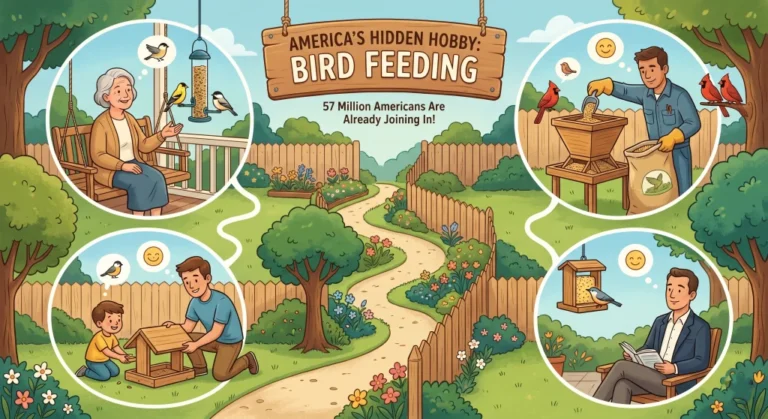
That father and son weren’t an isolated case. They were just one small part of a massive, quiet shift happening in backyards everywhere. If you think this is a small or niche community, the numbers tell a completely different story. According to research published by the USFWS and Virginia Tech, over 57 million Americans actively participate in feeding wild birds.
These are not hardcore hobbyists with expensive binoculars trekking through remote wetlands. They are just regular people putting seed in a yard and waiting to see what shows up. The scale of this quiet pastime is massive, yet it rarely gets talked about in the open.
It lacks the competitive gear culture of golf or the social performance of other outdoor sports. There is no leaderboard for who has the most chickadees at their feeder. It is just a person, a window, and whatever decides to fly in that day.
Why I Keep Talking About It
I do not stand behind a retail register anymore, but I still miss those daily conversations. That is honestly why I started this website in the first place. I wanted to take the practical things I learned and put them where they can help people who might never walk into a specialty shop. It is a way to keep sharing the knowledge without the retail hours.
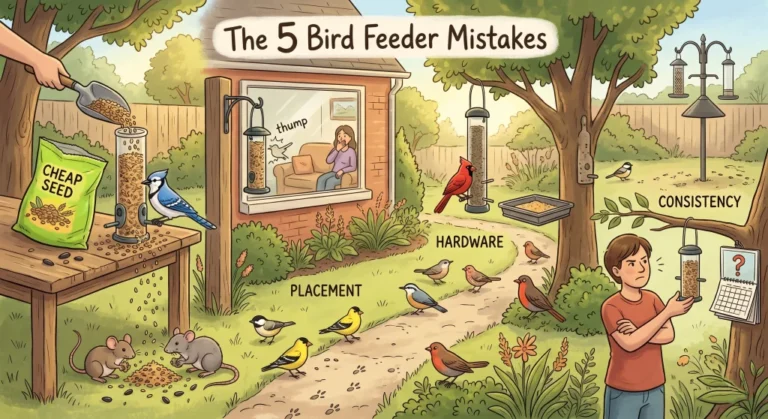
If you are wondering what goes wrong most often for beginners, you are not alone. I wrote down the most common bird feeder mistakes I saw every week to save you some early frustration. You can avoid a lot of wasted money just by knowing what to look for.
Final Thoughts: The View From the Window
You do not need to be an expert to get started with this. You just need a little bit of patience and a willingness to pay attention to the small things. If you are ready to bring some life to your own backyard, learning how to attract birds is simpler than you might think. Put up a feeder, step back, and watch what happens.