
The Hidden Problem with Plastic Threads
A new plastic hummingbird feeder operates perfectly straight out of the box, but the clock starts ticking the moment you hang it outside. Almost all bottle-style feeders rely on a tight vacuum seal to keep the liquid suspended inside the reservoir. You fill the bottle, screw the base on tightly, and flip it over. As long as air cannot enter through the threaded connection at the neck, the nectar stays exactly where it belongs. The problem is that plastic and constant sunlight are a terrible combination.
When you are weighing a glass vs plastic hummingbird feeder, the most critical factor is UV degradation. Over the course of a single summer, the intense ultraviolet rays from the sun begin to break down the molecular structure of the plastic. The material becomes slightly brittle, and the threaded neck of the bottle undergoes microscopic warping. The naked eye usually cannot see this distortion, but it is more than enough to let air seep into the reservoir.
Field Note: I cannot count how many times someone brought a leaking plastic feeder into the store, completely frustrated that it had suddenly started dripping out of nowhere. They would tighten the base as hard as they could, but it still leaked. When I ran my finger along the threaded neck, I could feel the microscopic warping caused by two summers of UV exposure. The plastic was structurally compromised, and the vacuum seal was permanently dead.
Once those threads warp, the feeder is essentially ruined. The continuous drip of nectar will attract every wasp and ant in your neighborhood, creating a massive headache on your patio. A high-quality glass hummingbird feeder completely bypasses this structural failure. Glass is impervious to UV degradation. The threaded neck of a glass bottle will hold its exact shape for decades, ensuring that the vacuum seal remains completely airtight year after year.
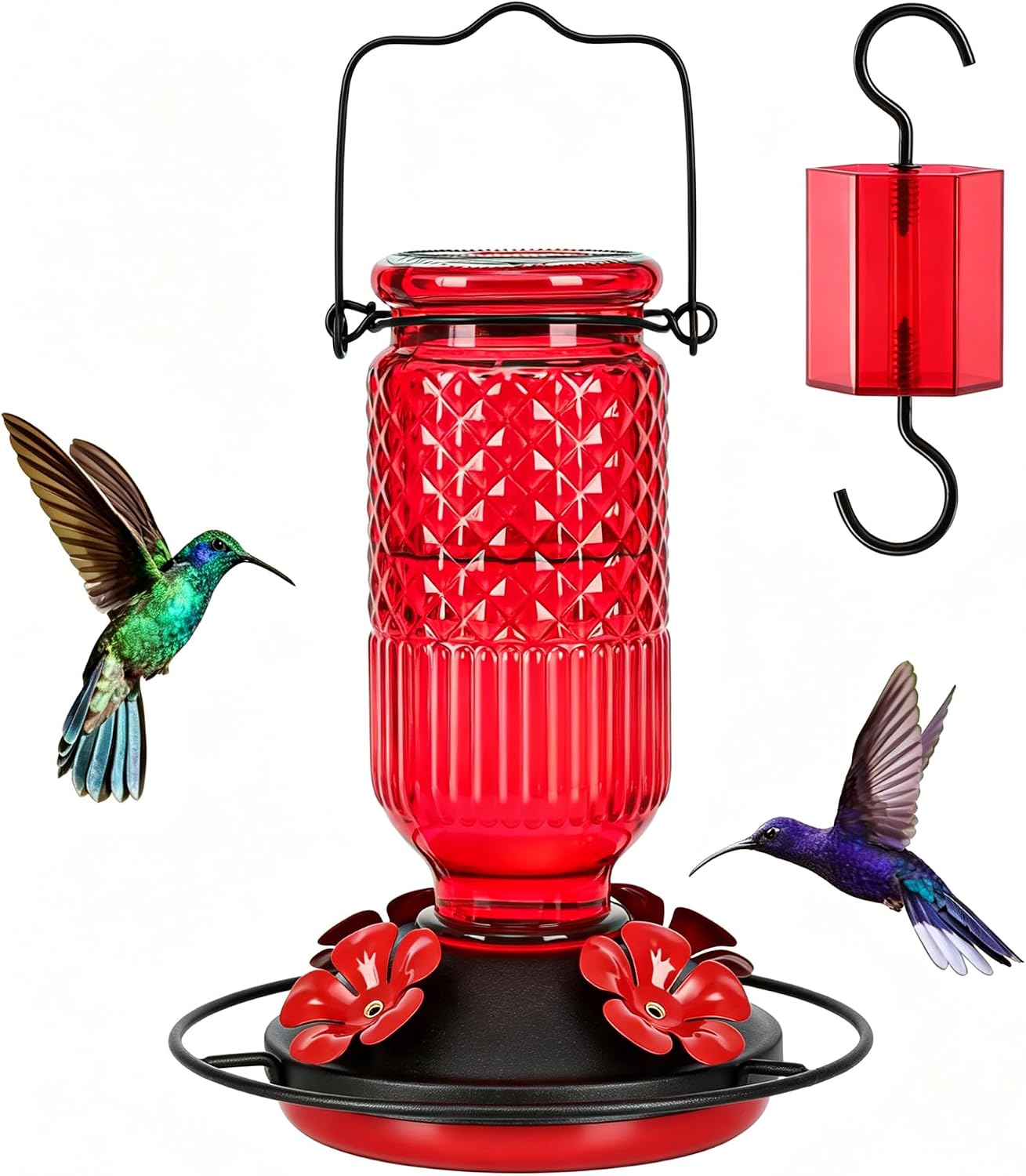
Wide-mouth glass bottle with 4 metal flower ports, 360-degree perches, and built-in ant moat to keep bees and ants away. Leak-proof gasket prevents spills even in wind. Transparent glass makes monitoring nectar levels effortless. BPA-free, weather-resistant, and a lovely gift for any nature lover.
Check on AmazonIf you click this link and buy, we earn a commission at no additional cost to you.
The Sanitation Advantage of Glass
Feeding hummingbirds requires a strict cleaning routine because sugar water ferments rapidly in the heat. To keep the birds safe from toxic black mold and fungal infections, you have to scrub the inside of the reservoir every time you refill it. This constant physical scrubbing exposes the second major flaw of plastic feeders. Plastic is a relatively soft material, and every pass with a stiff bottle brush leaves behind tiny, invisible scratches on the inner walls.
These micro-scratches become the perfect hiding spots for bacteria and mold spores. Once black mold takes root inside these microscopic grooves, it is almost impossible to remove it entirely with standard cleaning tools. You might think the feeder looks clean, but the hidden bacteria will cause your fresh batch of nectar to spoil much faster than it should. This is why experienced backyard birders eventually abandon plastic setups entirely.
Glass, on the other hand, is entirely non-porous and incredibly hard. You can scrub a glass bottle aggressively for years, and the inner walls will remain perfectly smooth. Mold has nowhere to hide, and bacteria easily wash away with simple hot water and a sponge. If you are looking for a truly durable hummingbird feeder that prioritizes the health of the wildlife, the hygienic properties of glass make it the only logical choice.
Aesthetic vs Functional: Handblown, Factory, and Painted Glass
When people decide to upgrade their hardware, they often look for something beautiful to hang in their garden. A handcrafted or glass-blown hummingbird feeder can look like a piece of vintage art hanging from a tree branch. There is a practical difference here, too: true handblown glass is usually much thicker and more resistant to shattering if the unit swings in the wind, whereas cheap factory-molded glass can be dangerously thin. However, regardless of the manufacturing method, you have to be extremely careful about how that glass gets its color.
The market is flooded with cheap glass bottles that are simply sprayed with a layer of red paint to make them visually appealing. Painted glass is a functional disaster waiting to happen. As the feeder sits out in the wind, rain, and intense sun, the external layer of paint inevitably begins to crack and peel. This flaking paint does not just look terrible. The chips can easily fall into the feeding ports or contaminate the nectar basin, creating a severe choking or ingestion hazard for the tiny birds visiting your yard.
Buying a clear glass bottle that has been coated with a cheap red film or sprayed with exterior paint. The coating will scratch during cleaning and peel off in the outdoor elements.
Choosing a feeder made from solid, integrated colored glass, or simply using a clear glass bottle with a red plastic or metal base. The birds are attracted to the red base just as easily.
If you want colored glass, ensure that the pigment is actually mixed into the glass itself during the manufacturing process. A true solid-color glass bottle will never fade, peel, or flake, regardless of how aggressively you scrub it or how long it hangs in the summer sun.
Weight and Hardware Considerations
Before you make the switch, you need to account for the physical weight of the new setup. A thick glass reservoir is significantly heavier than a thin plastic tube, even when completely empty. Once you add sixteen to twenty-four ounces of liquid nectar to the basin, the total hanging weight can easily exceed two or three pounds. This changes how and where you can safely install the feeding station.
If you have experimented with different bird feeder types in the past, you might be used to hanging lightweight plastic units from thin tree branches or using cheap plastic S-hooks. That hardware will eventually fail under the sustained weight of a heavy glass bottle. A sudden gust of wind can cause a plastic hook to snap, sending your premium feeder crashing onto the patio below.
To secure a heavier unit safely, you need to upgrade your hanging hardware simultaneously. Use solid steel shepherd’s hooks driven deeply into the ground, or heavy-duty metal branch hooks that wrap securely around thick tree limbs. Ensuring your mounting system can handle the swinging weight of a full glass bottle is a mandatory part of the upgrade process.

The unique 7 prongs design of bottom enables the garden hanging stake to stand more firmly on the ground. Even in bad weather, the shepard hooks can still stand upright and is not easy to fall. Compared with ordinary 2 prongs products, it has higher stability and firmness.
Check on AmazonIf you click this link and buy, we earn a commission at no additional cost to you.
Features to Look for in a Glass Upgrade
Not all glass setups are created equal. Even if the bottle itself is made of high-quality glass, the surrounding components determine whether the unit will actually last. When evaluating any hummingbird feeder, the base construction is just as important as the reservoir. A premium glass bottle attached to a flimsy, thin plastic base will still result in eventual failure.
To get the maximum return on your investment, look for a setup that pairs the glass reservoir with upgraded functional parts. Here is a checklist of features that separate a lifetime product from a single-season disappointment:
- Solid metal bases: Look for a base made of die-cast aluminum or brass. Metal threads locking into glass threads create an incredibly durable, leak-proof seal that ignores UV exposure completely.
- Wide-mouth bottle openings: Avoid narrow-necked bottles that look like old soda bottles. You want an opening wide enough to easily fit a standard bottle brush or sponge inside for thorough scrubbing.
- Two-part bases: The bottom basin must unscrew into two separate halves (a top cover and a bottom bowl) so you can clean the interior channels where the nectar actually sits.
- Built-in ant moats: Premium metal bases often feature a small cup at the top of the hanging wire to block crawling insects.

Red glass mason jar with embossed details and 5 flower-shaped ports on a wraparound perch, a stunning backyard accent that feeds multiple birds at once. Sturdy glass bottle and metal base built to last outdoors. Wide mouth makes filling and cleaning a breeze. Holds up to 32 oz so you never run out during peak season.
Check on AmazonIf you click this link and buy, we earn a commission at no additional cost to you.
Top-Rated Glass Bottle Designs with Metal Bases
To bridge the gap between knowing what features to look for and actually making a purchase, it helps to know which specific design configurations perform best in the real world. When you are ready to upgrade, look for listings that match these two proven profiles.
The Antique Square Bottle Design
These feeders look like vintage, square-sided medicine bottles. The square shape naturally uses thicker glass at the corners, making them incredibly durable and resistant to shattering. More importantly, this specific profile is almost always paired with a heavy die-cast aluminum base and wraparound metal perches. It is a heavy, industrial-grade setup disguised as an antique, making it one of the most reliable options available.
The Wide-Mouth Mason Jar Style
Modeled after traditional canning jars, this design solves the biggest cleaning headache in bird feeding. The opening at the bottom is several inches wide, allowing you to easily fit a large sponge inside rather than relying on a specialized bottle brush. When shopping for this style, verify that the threaded base ring is solid metal. Because the opening is so large, a plastic ring will warp even faster here than on a narrow-necked bottle.

This two-pack of 16-ounce saucer-style hummingbird feeders provides five feeding ports on each feeder for outdoor nectar feeding. The design includes bee guards and a built-in ant moat, while the wide opening makes routine refilling and cleaning easier. Its saucer construction is designed to reduce leaking and gives hummingbirds convenient access around the feeder.
Check on AmazonIf you click this link and buy, we earn a commission at no additional cost to you.
Material Comparison at a Glance
Making the decision to spend more upfront is easier when you map out the long-term reality of maintaining the hardware. Here is how the two materials perform across multiple seasons in a typical backyard environment.
| Feature | Plastic Feeders | Glass Feeders |
|---|---|---|
| UV Resistance | Poor. Threads warp and bodies turn cloudy over time. | Excellent. Impervious to sunlight degradation. |
| Sanitation | Fair. Develops micro-scratches that harbor mold. | Excellent. Non-porous surface stays perfectly smooth. |
| Vacuum Seal | Fails after 1 to 2 seasons due to thread warping. | Holds permanently due to rigid structural integrity. |
| Weight | Very light, easy to hang anywhere. | Heavy, requires sturdy steel hooks or thick branches. |
| Long-Term Cost | Requires replacement every few years due to leaking. | A one-time purchase if not dropped. |
The initial cost difference is usually just a few dollars, but the functional gap widens significantly with every passing month. When you factor in the wasted nectar from continuous dripping and the time spent scrubbing mold out of plastic grooves, the premium material easily pays for itself.

The Muse Garden 27oz Hummingbird Feeder uses a hand-blown glass reservoir with a wide opening for easier nectar refilling and cleaning. Its detachable base includes an ant guard and bee-resistant design, while an upgraded gasket helps reduce leaking during outdoor use. The feeder also provides multiple perches and copper feeding ports for convenient backyard hummingbird feeding.
Check on AmazonIf you click this link and buy, we earn a commission at no additional cost to you.
Final Thoughts: Buy Once, Cry Once
The cycle of buying a cheap plastic feeder, dealing with the inevitable sticky leaks by August, and throwing it away the following spring is a frustrating way to approach this hobby. The birds do not care about the price tag, but they do care about fresh, uncontaminated nectar. And you certainly care about keeping wasps off your deck.
Upgrading to a solid glass reservoir with a durable metal base eliminates the structural failures that plague cheaper models. It is a heavier piece of hardware, but that weight is exactly what makes it reliable. Hang it securely, keep it clean with a simple rinse, and enjoy watching the hummingbirds without the constant stress of monitoring a failing vacuum seal.
FAQs
🧊 Can glass hummingbird feeders freeze and break?
Yes. If you leave a glass reservoir full of liquid outside during freezing temperatures, the expanding ice will shatter the glass. You must bring them inside before the first hard freeze of the season.
🧼 Can I put a glass bird feeder in the dishwasher?
Many clear, unpainted glass reservoirs are top-rack dishwasher safe, which is a great way to sterilize them. However, you should always hand-wash metal or plastic base components, as the high heat can damage seals and paint.
🔴 Does the glass need to be red to attract hummingbirds?
No, the glass itself does not need to be red. A clear glass bottle attached to a red base is more than enough visual stimulation to catch a hummingbird’s attention from a distance.
🛠️ Can I replace just the base if it breaks?
Yes, many premium glass models use standard thread sizes, allowing you to buy a replacement metal base instead of a whole new feeder if something gets damaged. This is another long-term cost advantage over cheap plastic units.